Need to bring some finger food to a party or potluck? Why not impress your guests and friends with some home made, yet restaurant-quality, vegetarian spring rolls? These crispy golden spring rolls with cabbage and carrots are filled with umami (a.k.a. savoury flavour) due to the finely minced earthy shiitake mushrooms and shallots. They’re tasty whether deep-fried or baked!

Spring rolls have evolved over the centuries from containing just vegetables to containing meat. Traditionally, they’re eaten during the lunar new year to welcome prosperity and wealth. Don’t they look kind of like bars of gold?
Nowadays, spring rolls are a common Chinese take-out menu item. Unfortunately, some restaurants don’t make their own spring rolls and actually just deep-fry the frozen kind. But they can’t beat hand-made spring rolls. And honestly they’re pretty easy and fun to make.
This spring roll recipe was inspired from the vegetarian spring rolls that my dad used to make when we had a Chinese take-out restaurant. I kept the spring rolls vegetarian, since this recipe could reach more people that way. I’m also a HUGE fan of vegetarian spring rolls. Eating my dad’s spring rolls was my guilty pleasure, since it was a quick, tasty dose of vegetables.
Ingredients
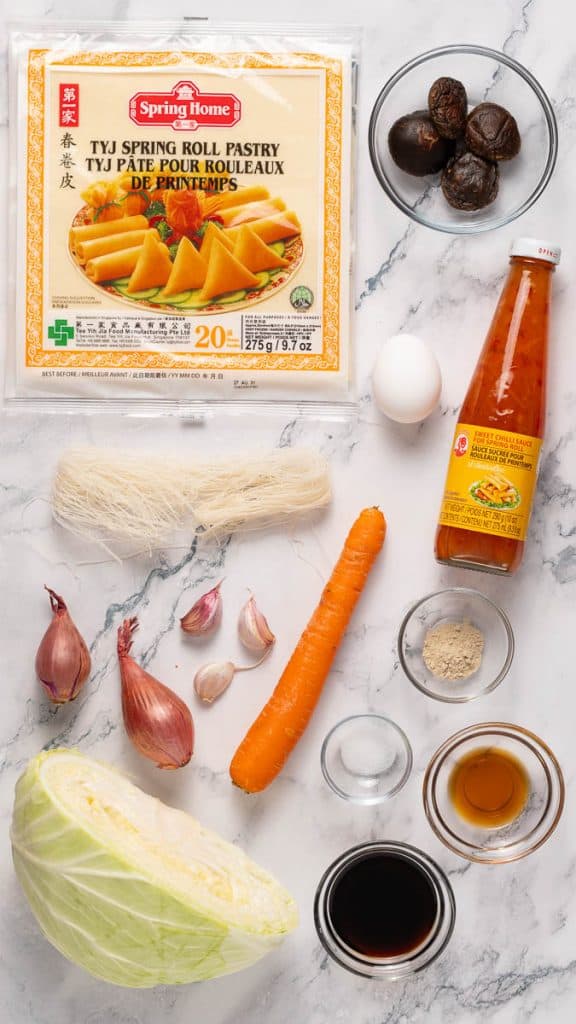
- Medium spring roll wrappers – You can use other sizes of spring roll wrappers if you prefer small or larger sized spring rolls. However, this recipe was optimized for medium-sized spring roll wrappers.
- Shiitake mushrooms – Shiitake mushrooms add earthiness and umami to the spring rolls. I used the dried kind because we usually have them on hand since they’re shelf-stable. Feel free to use the fresh kind if you want.
- Rice vermicelli – Very thin rice noodles that cook very easily, so they can be simply hydrated in a bowl of water before being added to the stir-fry part of the recipe.
- Shallots – Add a lot of umami flavour to the spring rolls, as well as a hint of sweetness. I find that they incorporate nicely in spring rolls since I find that they can easily be chopped very finely.
- Garlic – Also adds umami flavour
- Korean cabbage – Cabbage is the main vegetable in spring rolls (at least in my dad’s spring rolls) and becomes very soft after deep-frying.
- Carrot – The orange colour of carrots adds some colour and visual appeal to the spring roll filling.
- Sesame oil – I recommend using sesame oil that is on the browner side since they have a stronger, nuttier flavour than the lighter kind.
- Soy sauce – adds saltiness and umami
- White pepper – adds earthiness and a kick
- Salt
- Egg – To seal the spring rolls
- Neutral-flavoured oil – Use oil with a high smoke point such as vegetable oil or canola oil if deep frying
Where to Buy Ingredients
You can buy most of the ingredients at a local supermarket.
Shiitake mushrooms: To buy shiitake mushrooms, you may need to visit an Asian supermarket.
Spring roll wrappers: Spring roll wrappers are kept frozen and are sold in the Asian part of the frozen section of local supermarkets. My favourite spring roll wrappers is the Spring Home brand (see above). I believe it is the most popular brand in Canada, since I see them in almost every local and Asian supermarket. I know Chinese restaurants also use this brand.
Possible Ingredient Substitutions
There are many variations in spring rolls, so feel free to change up some of the ingredients.
- Shallots → onions, green onions
- Shiitake mushrooms → cremini mushrooms
- Korean cabbage → green cabbage (If using green cabbage, you should slice the cabbage very thinly and cook it longer to soften it up more).
- White pepper → black pepper
How to Make Vegetarian Spring Rolls
Rehydrate Dried Shiitake Mushrooms
For shiitake mushrooms to rehydrate completely, it would be best to allow them to rehydrate in a bowl of boiling water for at least an hour. You may rehydrate them in a bowl of room temperature water overnight in the refrigerator.
Usually, I am very last-minute with these sort of things, so I usually place the mushrooms in a bowl of boiling water. However, with this method, sometimes, not all of the mushrooms are rehydrated at the end.
A few mushrooms may have some dry spots. How the mushrooms rehydrate really depends on the shape of the mushrooms.
Prepare Rice Vermicelli
The brand of rice vermicelli that I got only requires that I rehydrate the noodles in water for 2 minutes and then drain. Check the instructions on the rice vermicelli that you bought. I like to make 2 – 3 cuts in the noodles with food-grade scissors, so that they can be put inside the spring rolls more easily. Then, they are ready for use in cooking and stir-fries.
Fry Aromatics – Shallots and Garlic
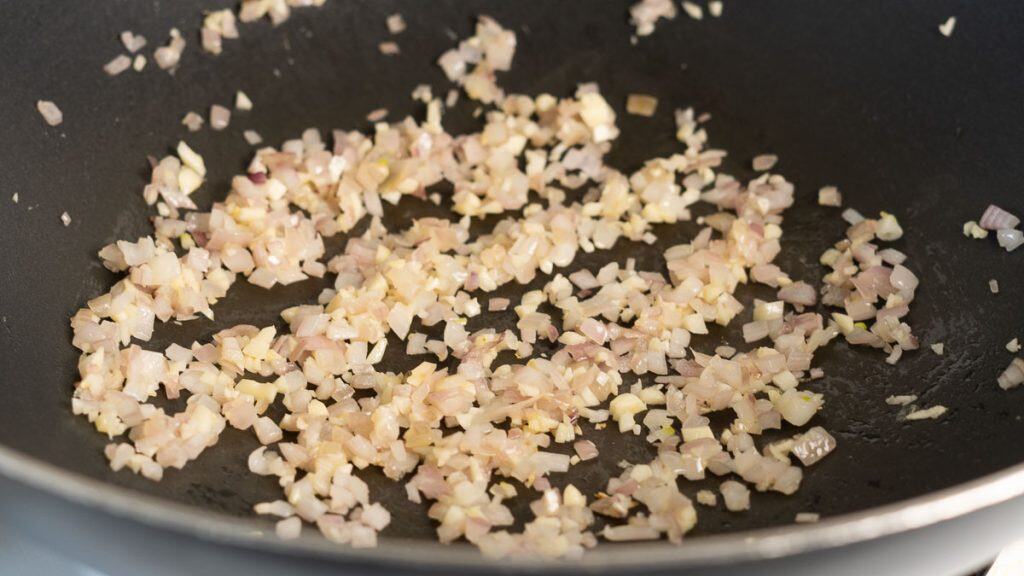
As with many other recipes, one of the first ingredients that are cooked are the aromatics such as shallots and garlic. Cooking them until slightly browned and fragrant creates the best flavours.
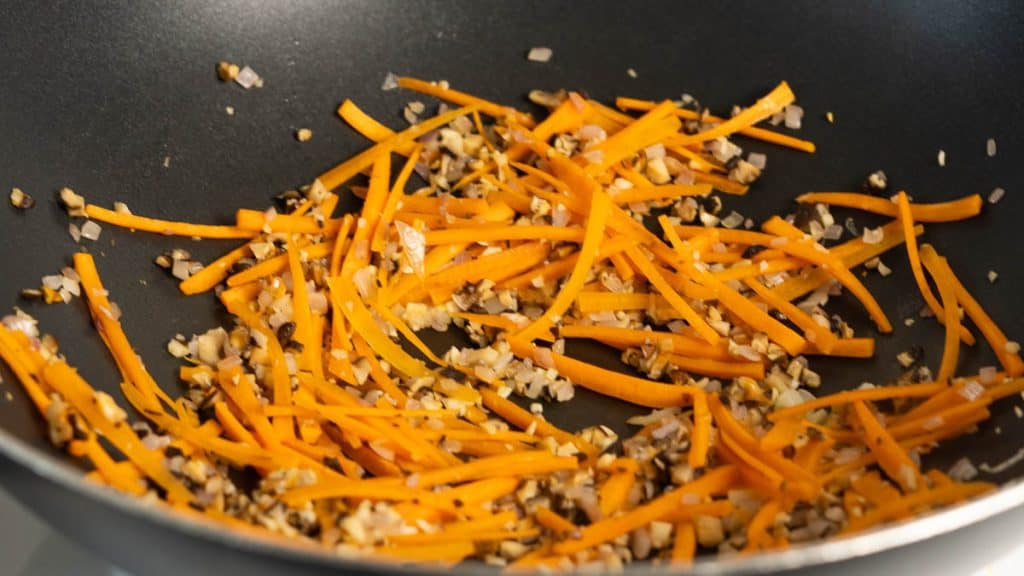
Stir in Mushrooms and Carrots
Cook the mushrooms and carrots, stirring frequently, so that the mushrooms become a bit browned and the carrots start becoming soft.
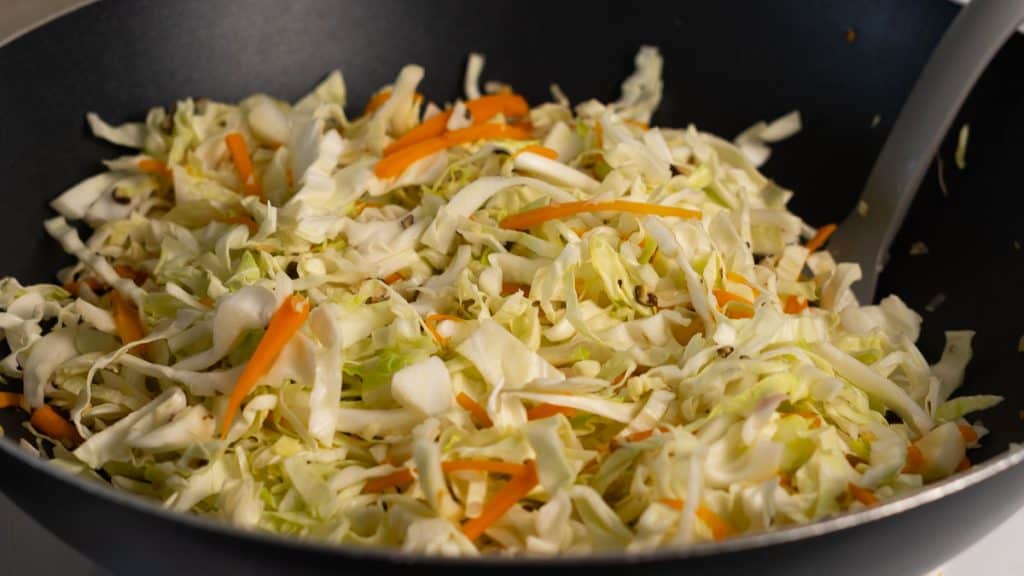
Cook the Cabbage
Slice the cabbage thinly so that it will fit into the spring roll easily when wrapped. We want the cabbage to be cooked enough so that it’s soft yet still has a bit of a bite to it.
Overcooking the cabbage could cause more water to come out. The filling could be wet, making the spring rolls soggy. The spring rolls would rip apart as they cook! (Trust me. I’ve had that happen because I overcooked the cabbage).
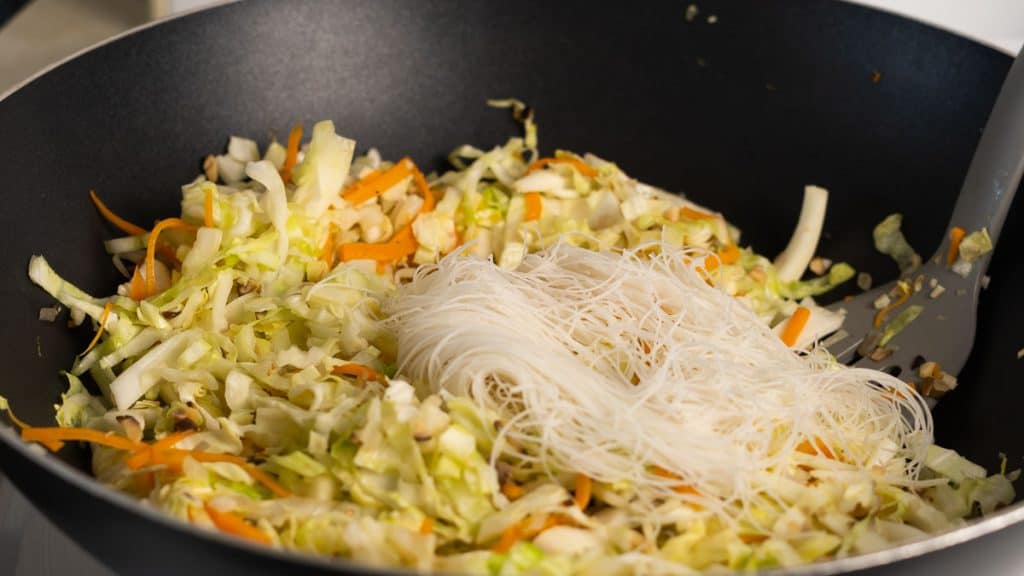
Stir in Rice Vermicelli and Seasonings
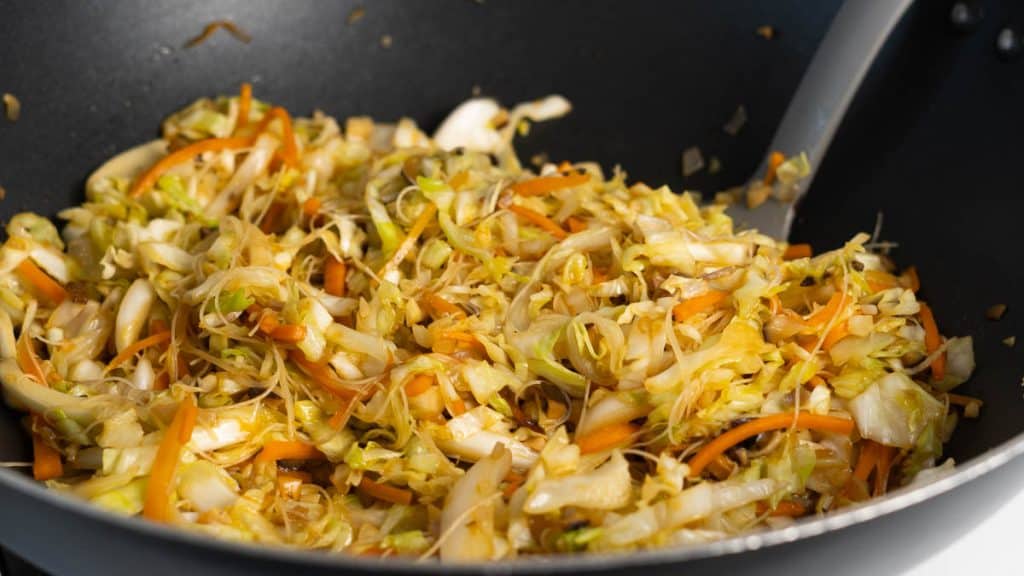
Add the rice vermicelli to the stir-fry for the filling, along with soy sauce, sesame oil , white pepper and salt. Taste the spring roll filling and adjust the seasoning as desired. We wouldn’t want to roll up the spring rolls if we’re not satisfied with the filling first!
Roll Up the Spring Rolls
Place the spring roll wrapper in a diamond shape in front of you with one corner pointing towards you.

Put some filling just below the center of the wrapper.

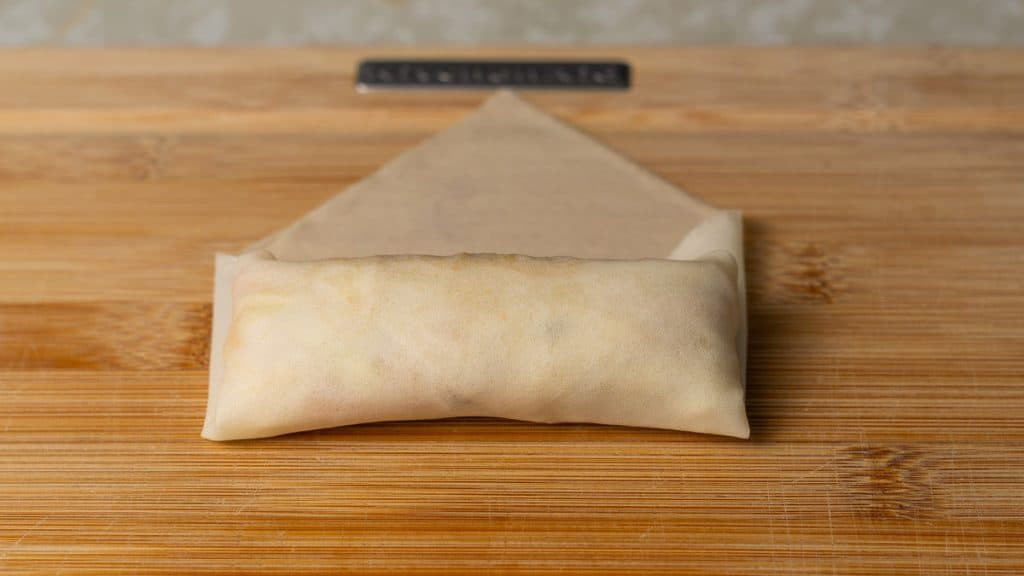
Fold the bottom corner up and tuck the filling in. Be careful to not apply too much pressure when tucking in. (I’ve broken some from doing that).

Fold one of the sides to the other side and vice versa. Rolling a spring roll is very much like making an envelope.

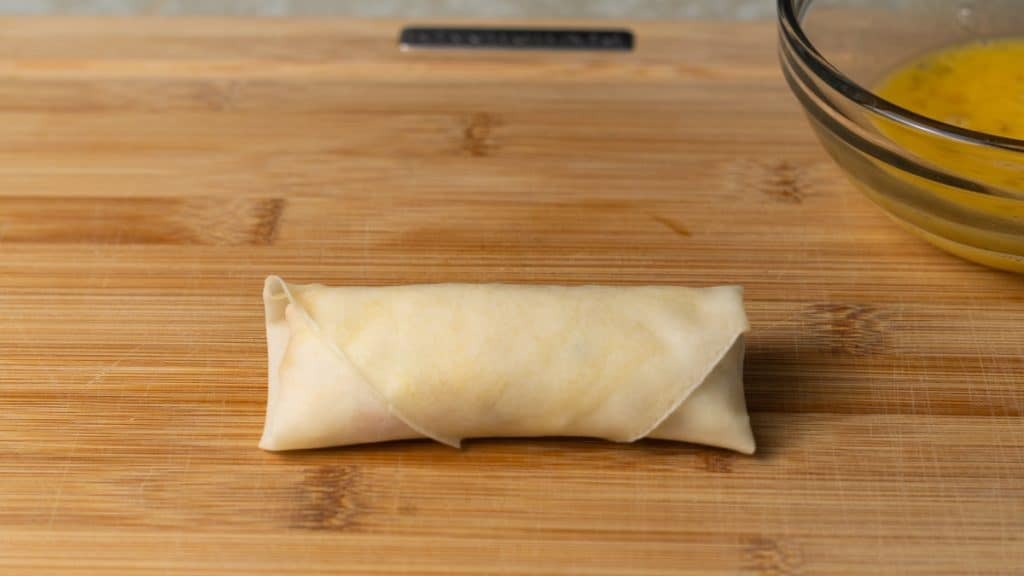
Then, spread some egg wash on the top corner of the wrapper, all over.

Roll the spring roll closed, making sure that the filling is well tucked in all the way. Place the spring roll on a plastic wrap lined plate or tray as you roll the rest of the spring rolls. You may freeze the spring rolls or cook them.
Deep Frying or Baking the Spring Rolls
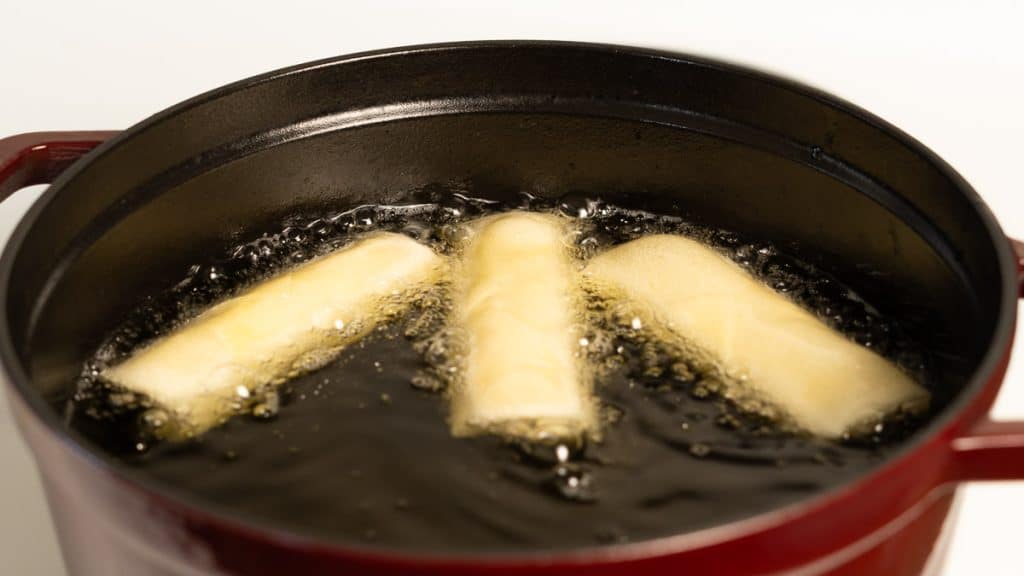
Deep frying the spring rolls yields the best results in terms of crispiness and appearance. Spring rolls turn golden brown pretty evenly when deep frying. If deep-frying the spring rolls, fill a heavy-bottomed pot such as a Dutch oven with a few inches high of oil. Fry the spring rolls for a few minutes or until golden brown.
However, baking is a great alternative if you want less mess (no oil splashes or spills) and if you want a simpler method using less oil. The downside with baking spring rolls is that the spring rolls aren’t evenly browned. If you do choose to bake them, line a baking sheet with parchment paper.
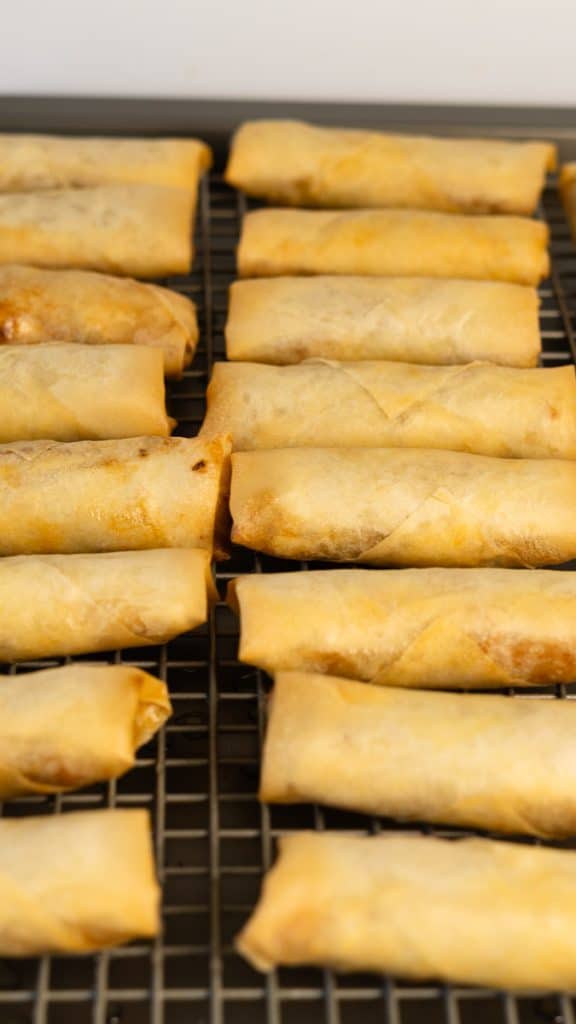
Once you are done deep frying or baking spring rolls, the best place to put them is on a cooling rack, so they don’t become soggy.
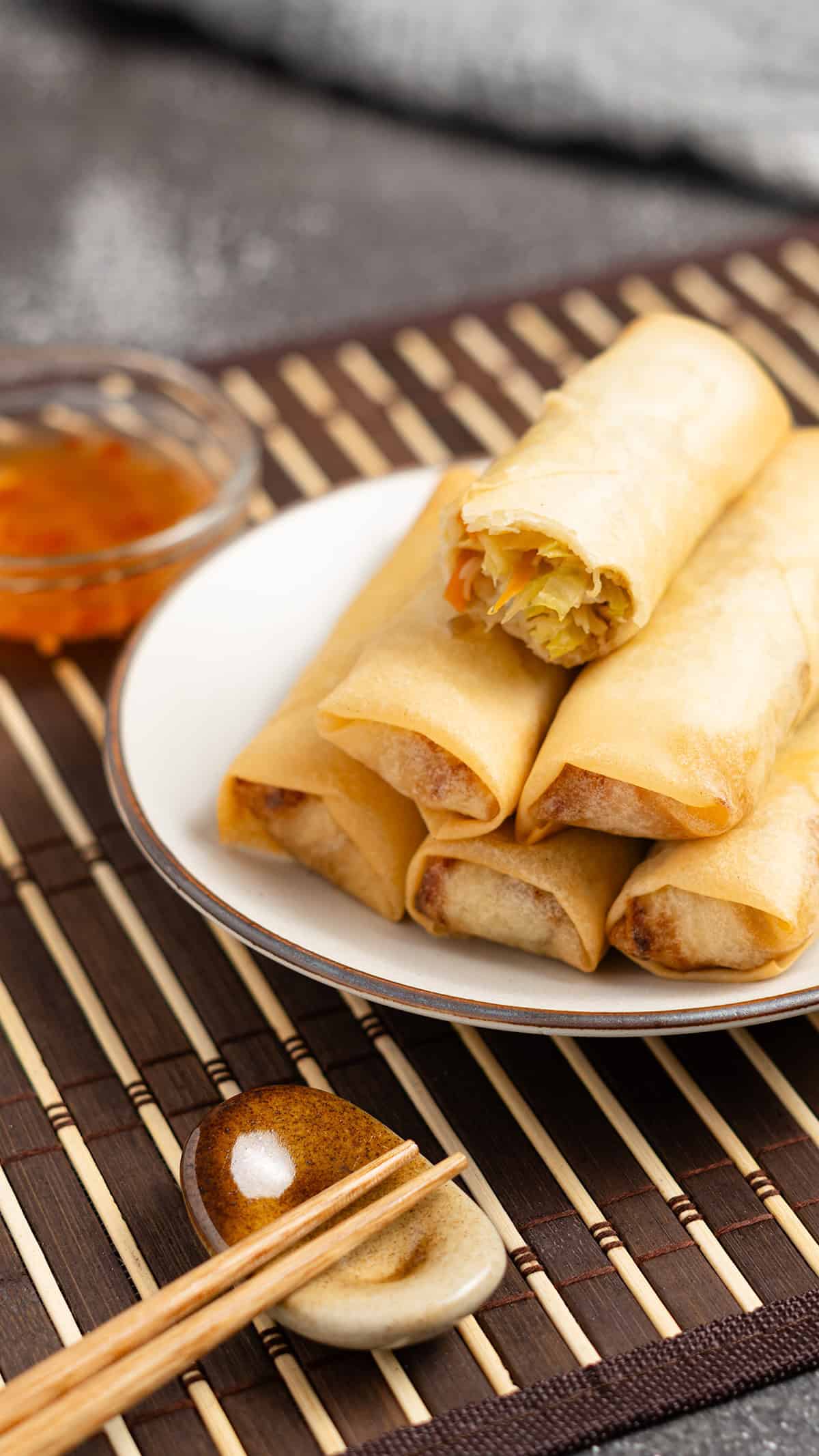
Vegetarian Spring Rolls
These crispy vegetarian spring rolls with cabbage and carrots are filled with flavour from earthy shiitake mushrooms and savoury, yet sweet, shallots.
20
spring rolls1
hour25
minutes77
kcal1
hour25
minutesKeep the screen of your device on
Ingredients
4 dried shiitake mushrooms
20 g dried rice vermicelli
3 garlic cloves , minced
2 shallots , minced
1 small carrot , julienned
½ head korean cabbage , thinly sliced in to strips
2.5 tbsp soy sauce
2 tsp sesame oil
½ tsp white pepper
¼ tsp salt
20 medium-sized spring roll wrappers
1 egg , beaten
oil for baking and/or frying
spring roll sauce for serving
Directions
- Preparing Spring Roll Filling
- Let mushrooms hydrate in boiling water for at least 30 minutes. Finely mince the mushrooms.
- Prepare rice vermicelli according to manufacturer’s instructions. Cut the vermicelli twice.
- Heat oil in the large pan or wok. Fry garlic and shallots until aromatic on medium heat for 2-3 minutes.
- Throw in mushrooms and carrot and cook until softened and browned, stirring frequently for about 2 minutes.
- Add the cabbage to the pan and cook until just softened but not overcooked on medium high heat for 7-8 minutes. Turn off the heat.
- Toss in the vermicelli until well-combined.
- Mix in soy sauce, sesame oil, white pepper and salt. Adjust taste as necessary in terms of salt and pepper.
- With one corner of a spring roll wrapper pointing towards you, place about ¼ cup filling in the center of the spring roll wrapper. Seal the spring roll like an envelope by first folding up the bottom of the wrapper over the filling. Tuck in the filling. Then, fold the sides inward toward the center.
- Spread some egg wash all over the top corner of the wrapper and roll the spring roll to seal. Make sure to roll the spring roll so that it is fully sealed tightly.
- Deep-Frying Spring Rolls
- Fill a heavy bottomed pot 2 inches deep with neutral-flavoured oil. Deep fry at for 5 minutes or until golden brown. Move spring rolls around occasionally so that they don’t burn if they stick around the bottom of the pot. Try to turn the spring rolls over while deep frying so they’re fried evenly. Or push the spring rolls down with tongs into the oil. Deep fry a few spring rolls at a time so the temperature of the oil doesn’t drop too much.
- Baking Spring Rolls
- Brush both sides of spring rolls generously with oil and bake at for 12 minutes on one side and 13 minutes on the other.
- Place spring rolls on a cooling rack.
Nutrition Facts
- Total number of serves: 1
- Calories: 77kcal
- Fat: 1g
- Saturated Fat: 0.2g
- Trans Fat: 0.001g
- Polyunsaturated Fat: 0.3g
- Monounsaturated Fat: 0.3g
- Cholesterol: 10mg
- Sodium: 275mg
- Potassium: 85mg
- Carbohydrates: 14g
- Fiber: 1g
- Sugar: 1g
- Protein: 3g
- Vitamin A: 546IU
- Vitamin C: 9mg
- Calcium: 23mg
- Iron: 1mg