Wavy Cantonese chow mein noodles are fried until crispy golden brown all over. Then, it’s topped with juicy stir-fried meat and vegetables drenched in a savoury sauce.
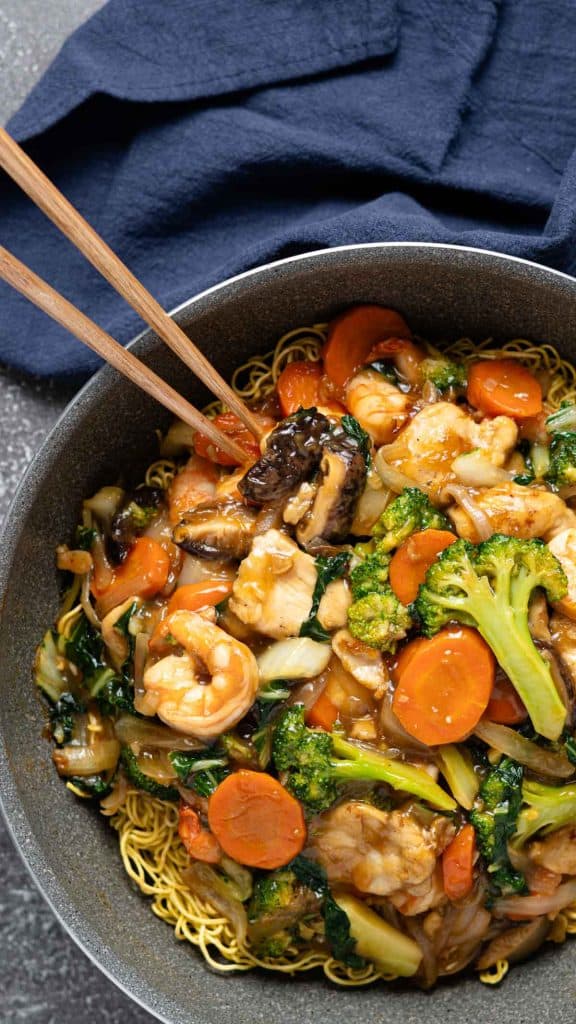
Back when my parents ran a Chinese take-out restaurant, I often ordered Cantonese chow mein from the menu, since it had a variety of vegetables in it like bok choy, broccoli, and carrots. It was also packed with a lot of protein with ingredients like chicken, shrimp and mushrooms.
So I decided to make my own version of Cantonese chow mein. I’m so excited to share it with you! I also tried a Cantonese chow mein with crispy noodles at another local Chinese restaurant. Since I liked the crunch, I decided to try to replicate the texture of the noodles by frying the noodles a bit more than my dad would.
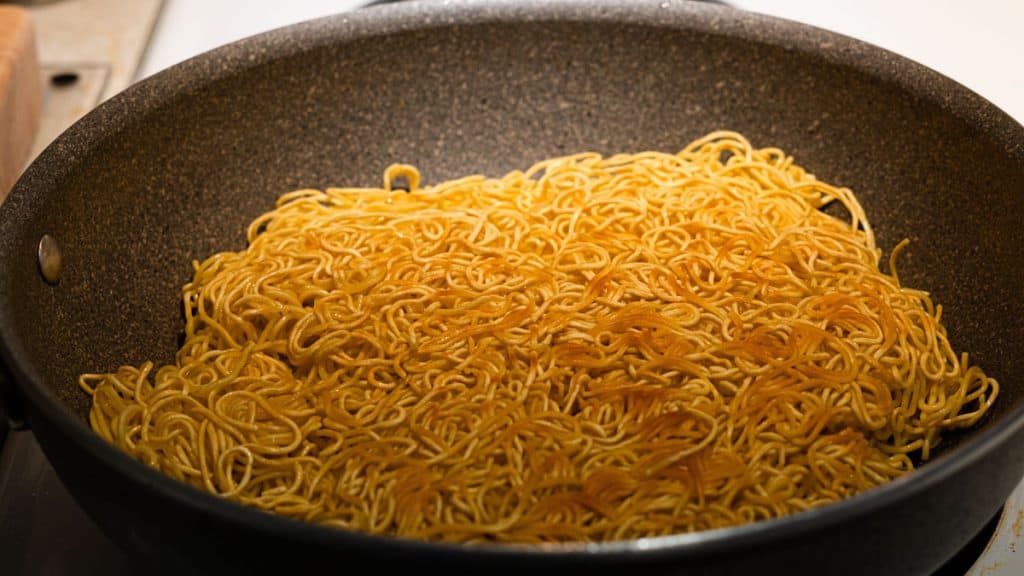
There are many variations of Cantonese chow mein. Sometimes the noodles can be soft. This is the way my dad made it. Some other restaurants make their noodles fully crispy. My version of Cantonese chow mein has both soft and crispy noodles. The noodles will be mostly soft, but the noodles in contact with the wok will be crispy.
Equipment You’ll Need
- Large sautee pan / wok
- Spatula – For stir-frying the vegetables and flipping the noodles.
- Tongs – I find that the easiest way to toss noodles in oil is with a pair of tongs. You could definitely do it with chopsticks and other utensils though.
- Colander – For draining the noodles so they can become crispy more easily during frying.
About the Ingredients
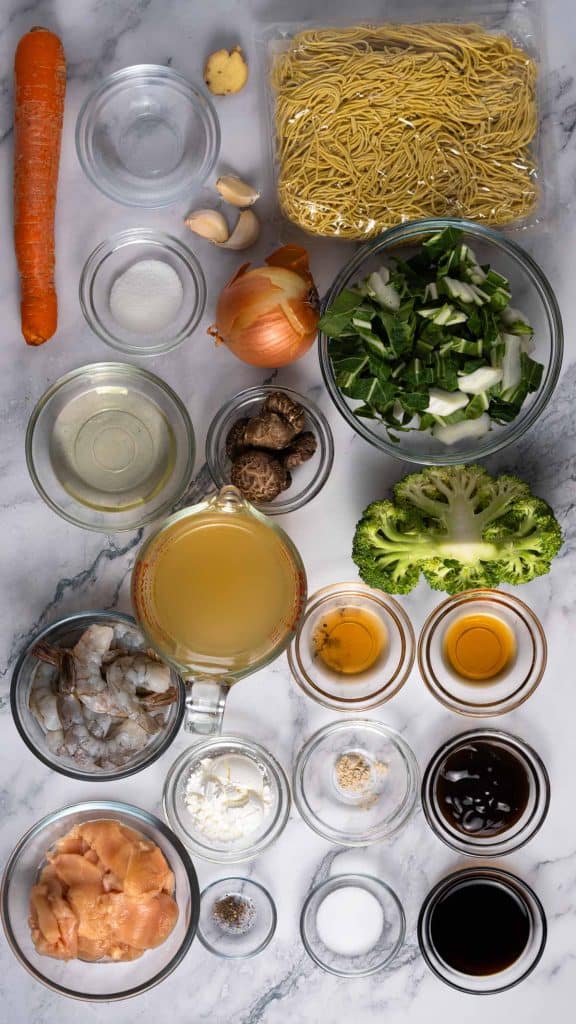
- Cantonese chow mein noodles – These are egg noodles, which browns more nicely than other types of noodles when fried. You may be able to find these at your local supermarket.
- Shaoxing wine – This is a Chinese cooking rice wine that you can find at your local Asian supermarket. You can substitute this with sake, which is also a rice wine. It would function the same way as Shaoxing wine in terms of deglazing, although the flavours are different.
- Shiitake mushrooms – These mushrooms have a deep earthy flavour combined with savouriness or umami. The texture is meaty as well. I buy the dried kind, as they keep longer than fresh shiitake mushrooms, and I think they’re also cheaper in the end. The only caveat is that the shiitake mushrooms need a bit of time to hydrate (i.e., at least 30 minutes).
- Oyster sauce – I’ve been seeing this more and more at local supermarkets and not just Asian ones. Like soy sauce, it makes dishes saltier, sweeter and more savoury, but has a more oceanic taste due to the oyster extract in it.
Ingredient Substitutions
- Protein ingredients – you can substitute chicken and/or shrimp with other protein ingredients such as tofu, beef and pork.
- Vegetables – you can change the vegetables up in this dish and use other vegetables such as cabbage, bell peppers, cauliflower, etc.
- Bok choy – I like to use the big kind of bok choy for Cantonese chow mein since that is what my dad used to use in his Cantonese chow mein. However, you can definitely use other types of bok choy like Shanghai bok choy or baby bok choy.
- Noodles – You can substitute the Cantonese chow mein noodles for other types of noodles. However, if you are not using egg noodles, you may want to skip the step where you crisp up the noodles.
How to make Cantonese Chow Mein
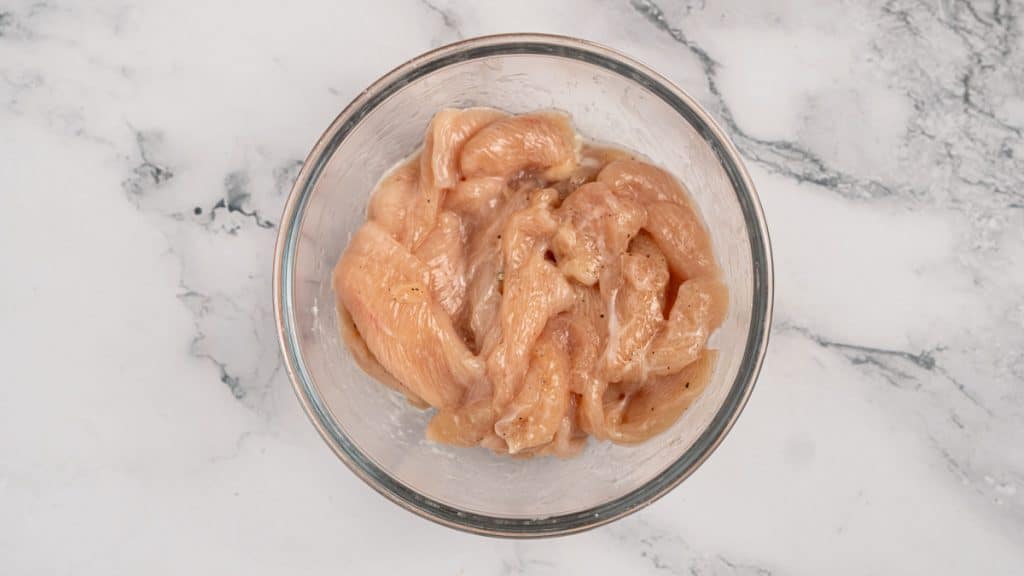
Velvet the chicken breast with oil, cornstarch, salt and pepper and set aside. Every Chinese restaurant uses this cooking technique called velveting to make stir-fries with juicy, tender meat. How does it work? When starch acts as a barrier around the meat, it absorbs and retains the moisture from the meat. This prevents the meat from drying out during cooking.
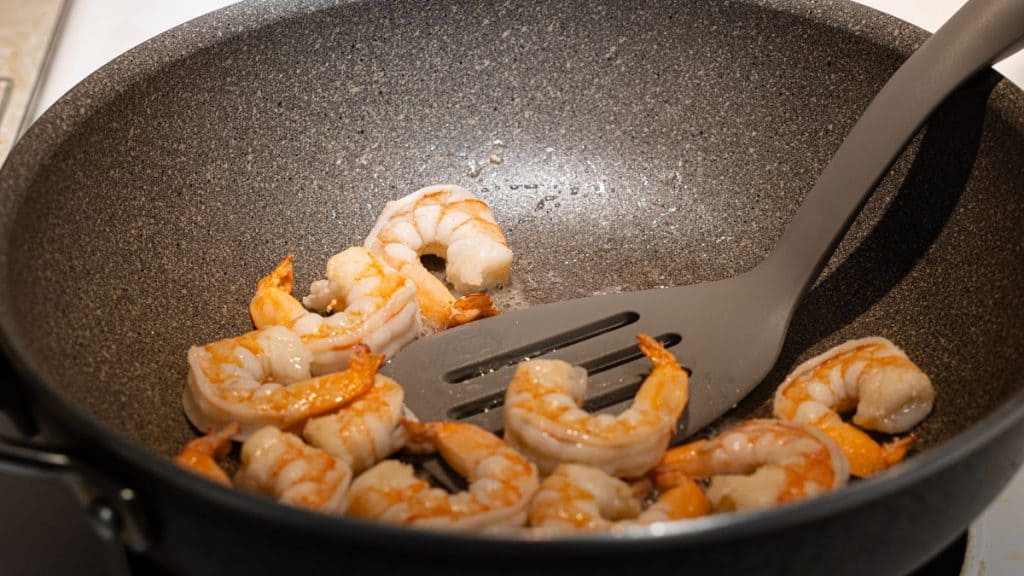
We’ll cook our proteins completely and brown them before mixing them into the noodles. Let’s cook the shrimp first since they cook fast. Fry the shrimp until opaque.
Then, we’ll cook the chicken breast until browned. Notice how the chicken breast has retained its juiciness because of the addition of cornstarch earlier.
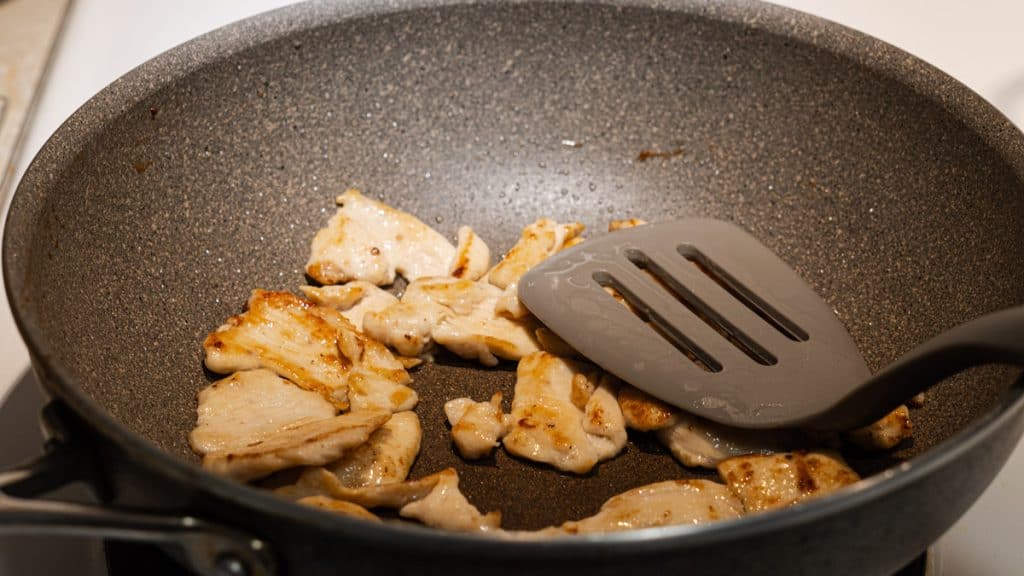
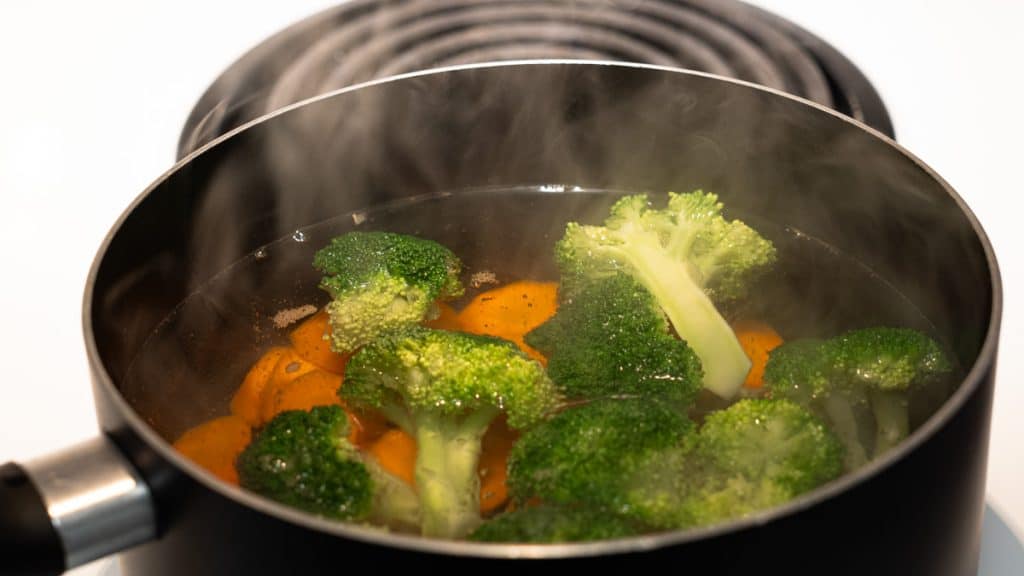
Boil the carrots and broccoli for a couple of minutes, drain, and set aside. We don’t want to cook them for too long since we will be cooking them a bit further when we assemble the Cantonese chow mein.
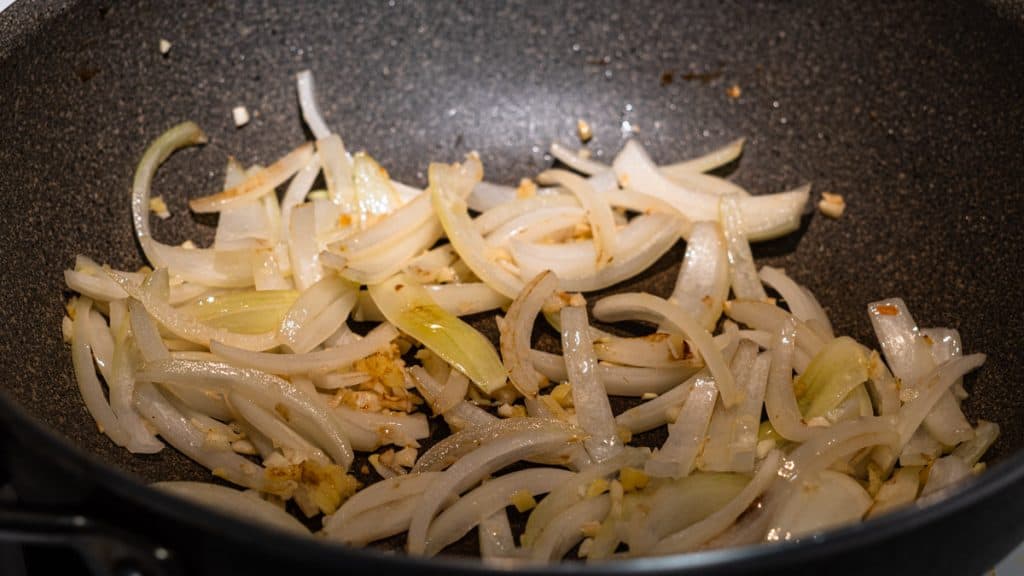
Fry the aromatics (garlic, ginger and onions) together until they are well… aromatic and slightly browned.
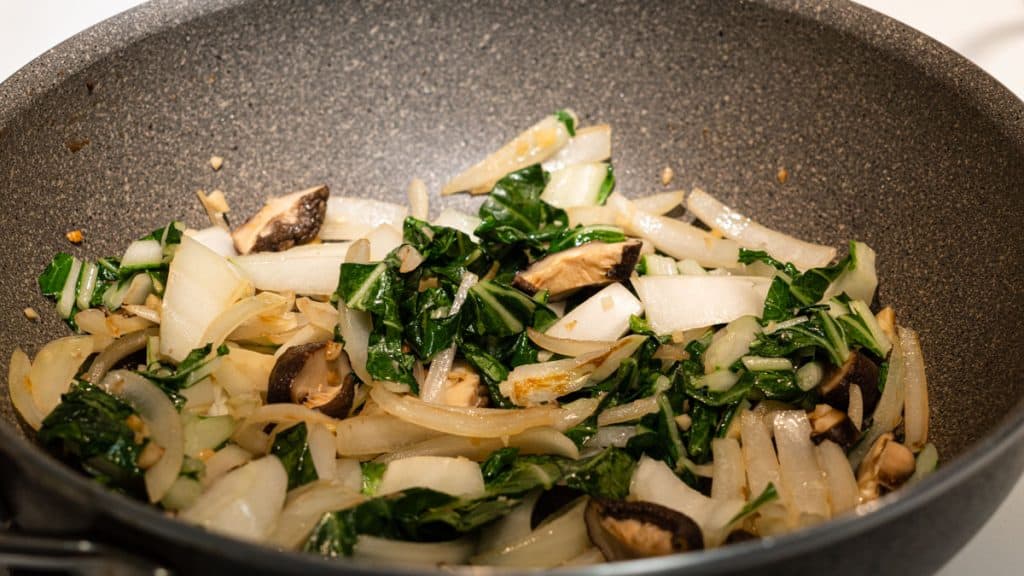
Add bok choy and shiitake mushrooms to the saute pan or wok and stir-fry until mushrooms brown and bok choy wilts.
Throw in the blanched broccoli and carrots from earlier and deglaze with shaoxing wine, stir-frying for about 30 seconds. The wine helps to loosen out the browned bits that have formed at the bottom of the pan after frying the meats and vegetables. The wine then carries these flavourful browned bits, dispersing them throughout the dish. Set aside the vegetable mixture. Then, bring chicken broth to a boil.
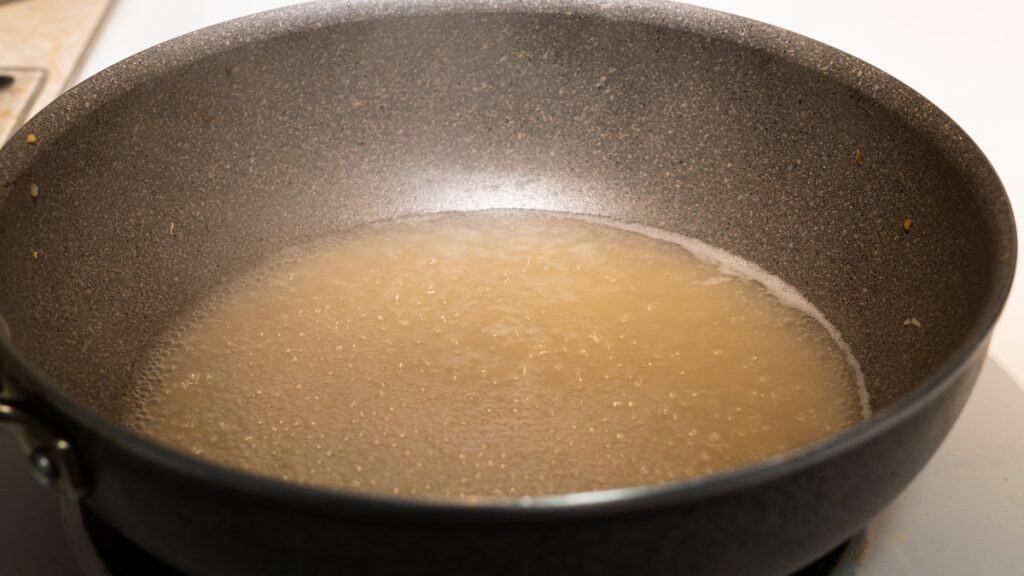
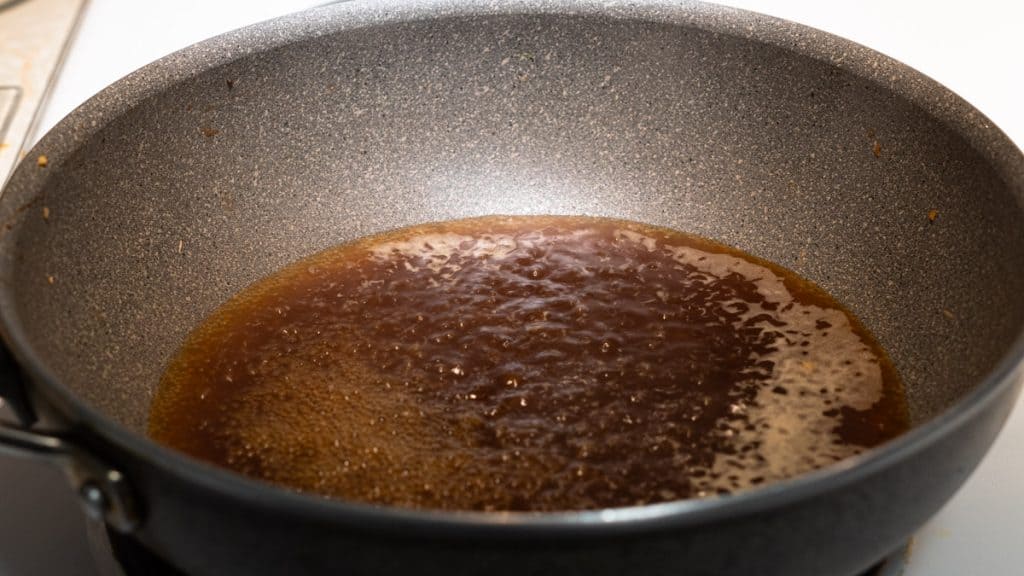
Then, mix the seasonings (soy sauce, oyster sauce, salt, sugar, and white pepper) into the chicken broth.
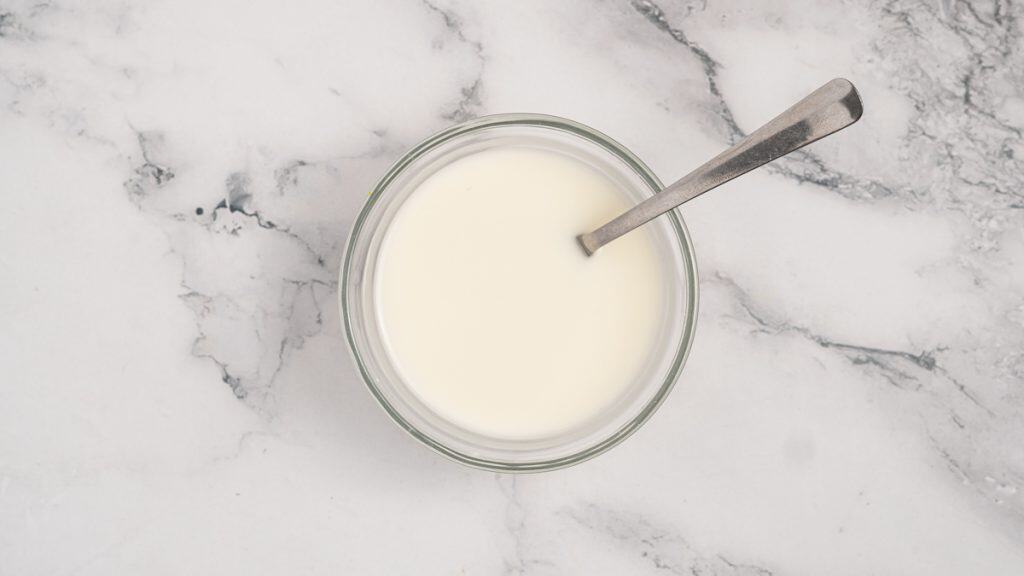
Create a cornstarch slurry by mixing cornstarch in water.
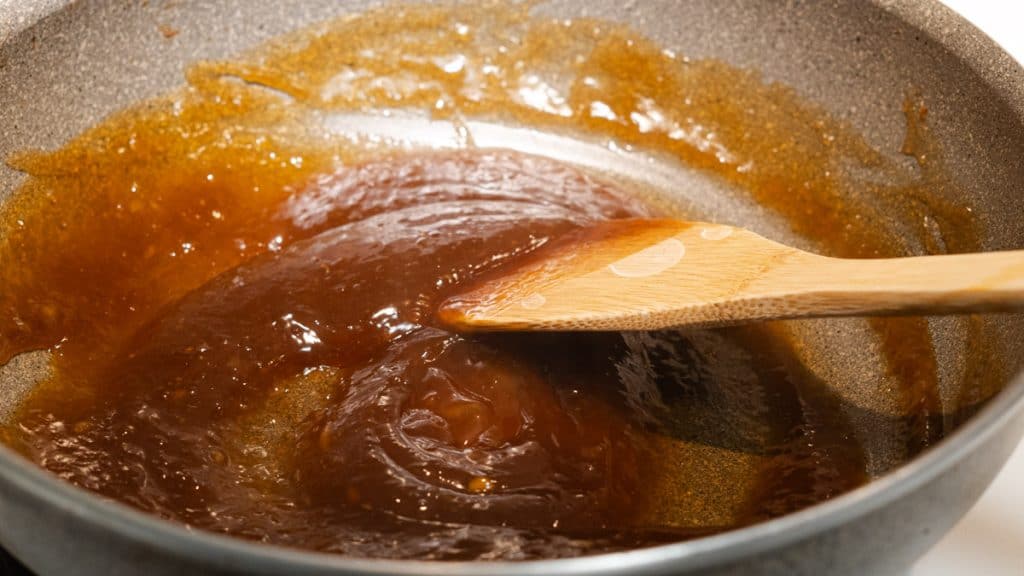
While constantly stirring the sauce mixture, add the cornstarch slurry slowly. Mix until the sauce becomes thicker and no longer has streaks of white. You want to stir the cornstarch in quickly, since it can cook quickly and form globs of jelly. The cornstarch undergoes a process called gelatinization when it is heated in water. The starch granules break during this process and hydrate, which causes them to increase in size. This then creates a thick sauce.
Mix the vegetables, chicken and shrimp into the sauce until well coated, along with sesame oil.
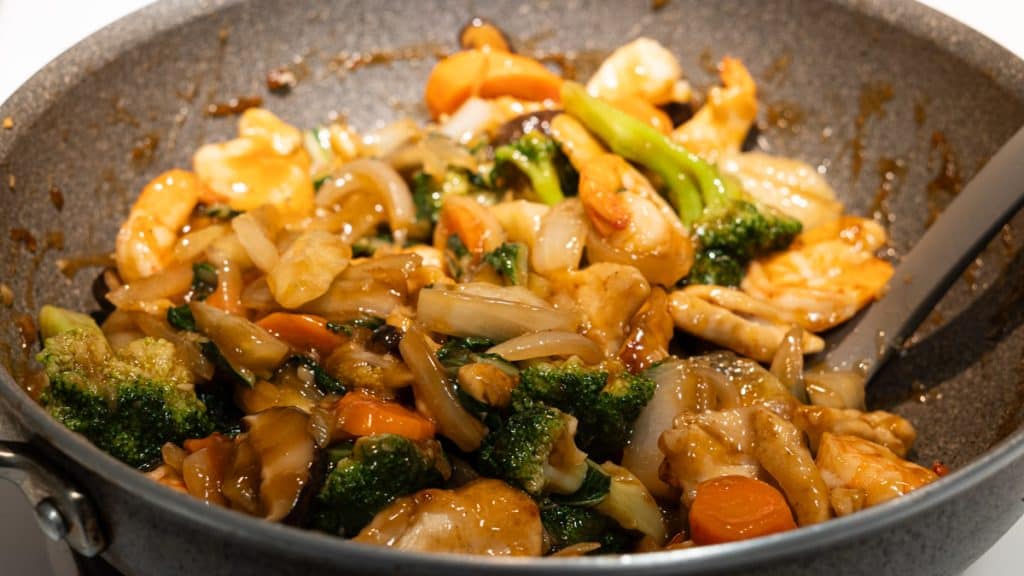
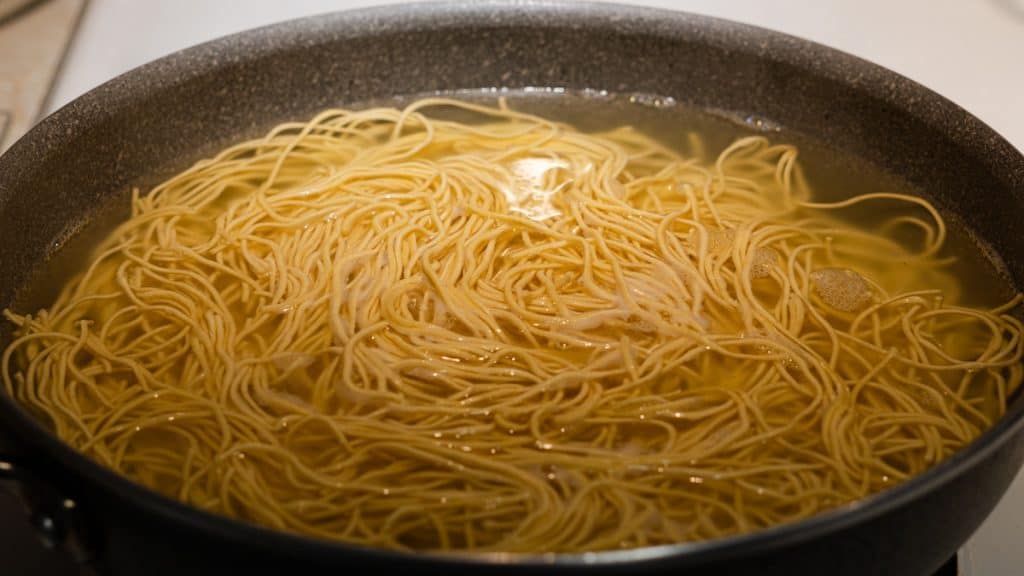
Remove the stir-fry from the saute pan/ wok. Clean the pan/ wok. Boil and drain the Cantonese chow mein noodles according to the manufacturer’s instructions. Drain the noodles in a colander to remove all the water. You want the noodles to be as dry as possible so that they will easily crisp up during frying.
Heat a generous amount of neutral-flavoured oil in the pan/ wok on medium heat and toss noodles in the oil until coated. Let noodles sit in the pan/ wok and cook them until browned and crispy. Flip the noodles.
Pour the vegetable-meat mixture on top of the noodles and cook the noodles until browned and crispy on the bottom.
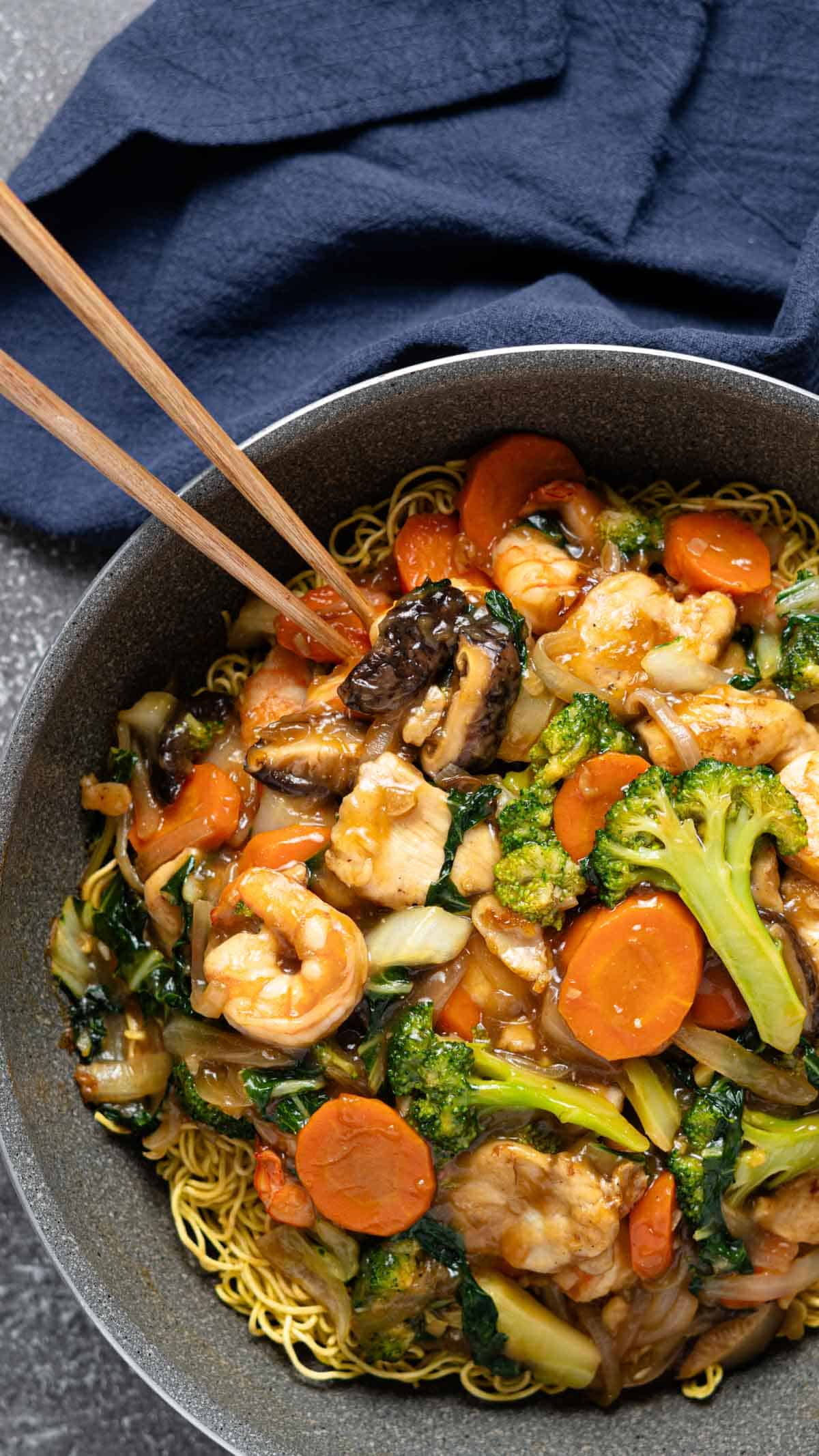
Cantonese Chow Mein
Juicy stir-fried chicken, shrimp, and vegetables in a savoury sauce are served on top of golden, crispy noodles.
6
people30
minutes1
hour539
kcal0
minutesKeep the screen of your device on
Ingredients
- Chicken Marinade
½ lb chicken breast , boneless, skinless, thinly sliced
1 tsp oil
1 tsp cornstarch
¼ tsp salt
1 pinch black pepper
- Shrimp
½ lb shrimp , peeled and deveined
1 pinch salt
- Stir-fried vegetables
1 small crown of broccoli , chopped
1 carrot peeled and sliced
3 cloves garlic , minced
1 tsp ginger , minced
1 small onion , sliced into wedges
2 cups bok choy , sliced (about ½ large bok choy)
6 dried shiitake mushrooms , hydrated and sliced (See Note 1)
1 tbsp shaoxing wine (or sake)
- Stir-fry Sauce
1.5 cups unsalted chicken broth
3 tbsp soy sauce
3 tbsp oyster sauce
⅛ tsp salt
1 tsp sugar
¼ tsp white pepper
3 tbsp cornstarch
¼ cup water
1.5 tsp sesame oil
- Crispy Cantonese Chow Mein Noodles
1 lb Cantonese chow mein noodles
¼ cup oil
Directions
- Marinate chicken breast with oil, cornstarch, salt, and black pepper. Set aside.
- Season shrimp with salt. Cook shrimp for about 1 – 2 minutes on medium high heat and set aside.
- Stir-fry the chicken breast until browned on medium-high heat. Set aside.
- Boil broccoli and carrots for 2 minutes. Drain and set aside.
- Fry garlic, ginger, and onions and cook until fragrant and onions are translucent, stirring frequently for about 3 minutes on medium-high heat.
- Stir-fry the bok choy and mushrooms with the aromatics for about 3-4 minutes at medium heat until bok choy is wilted and mushrooms are browned.
- Stir in blanched broccoli and carrots, along with shaoxing wine for about 30 seconds. Set aside the vegetable mixture.
- Bring chicken broth to a boil and stir in soy sauce, oyster sauce, salt, sugar, and white pepper until well combined.
- Make a cornstarch slurry by mixing water and cornstarch together. Gradually add this slurry to the pan/ wok while constantly stirring until the sauce thickens.
- Once the sauce is thickened, stir in the cooked vegetables, chicken, shrimp, and sesame oil until well-coated.
- Remove the vegetable-meat mixture from the pan/ wok. Clean the pan/ wok.
- Separate the noodles and boil for 1 minute uncovered. Drain the noodles in a colander.
- Heat ¼ cup of oil in the pan/ wok and then add noodles. Toss noodles in oil until completely coated, using tongs or chopsticks. Cook the noodles on medium heat for about 5-10 minutes or until crispy brown. Flip the noodles over and cook for another 5-7 minutes.
- Pour the vegetable-meat mixture over the noodles to serve.
Notes
- Hydrate the dried shiitake mushrooms in boiling hot water for 30 minutes.
Nutrition Facts
- Total number of serves: 1
- Calories: 539kcal
- Fat: 14g
- Saturated Fat: 1g
- Trans Fat: 0.05g
- Polyunsaturated Fat: 4g
- Monounsaturated Fat: 7g
- Cholesterol: 85mg
- Sodium: 1537mg
- Potassium: 776mg
- Carbohydrates: 71g
- Fiber: 8g
- Sugar: 6g
- Protein: 32g
- Vitamin A: 3384IU
- Vitamin C: 104mg
- Calcium: 117mg
- Iron: 4mg