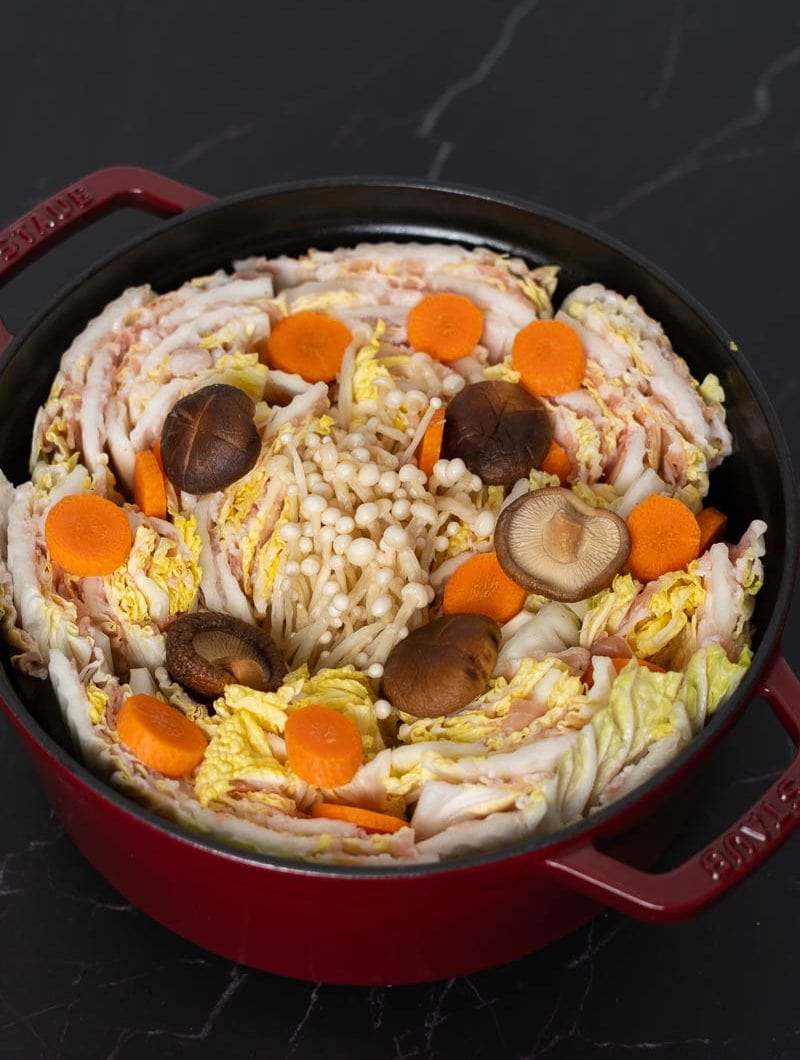
Mille feuille nabe will bring warmth to your dinner table after a cold day. The napa cabbage and pork belly are simmered to tender perfection in savoury dashi broth. You can impress guests with this dish, as the multiple layers of napa cabbage and pork belly resemble a blooming flower.
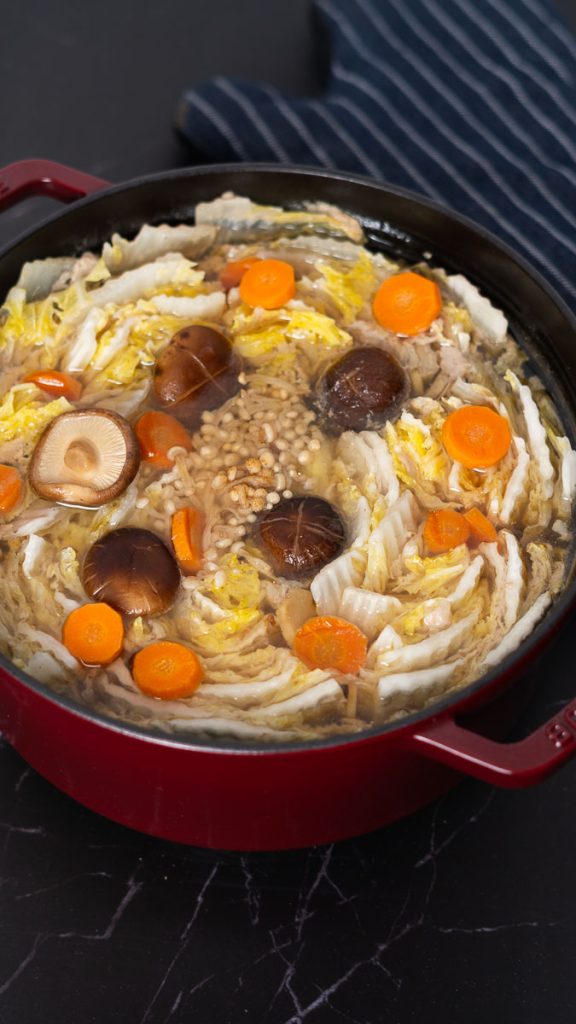
On a cold day, there’s nothing better than having some hot pot to warm you up.
Ingredients
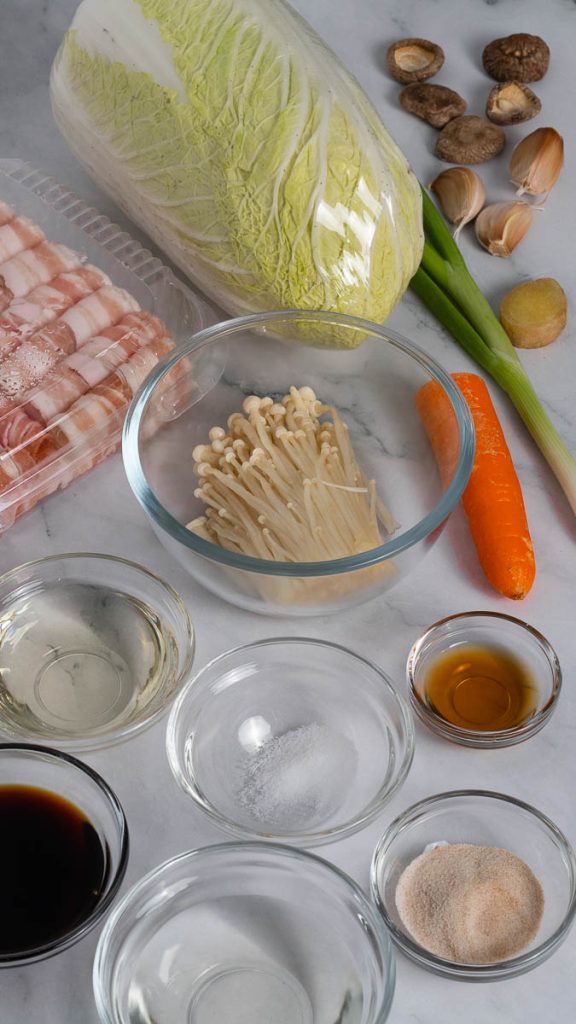
- Napa Cabbage – I found that napa cabbages between 900 g – 1200 g were a good size for my Dutch oven. Try to find enough napa cabbage so you can fill your Dutch oven or other heavy-bottomed pot completely too. This way, the napa cabbage slices will fit snugly.
- Pork Belly Slices (thinly cut) – I would suggest buying pre-sliced pork belly rather than slicing it yourself, unless you have a meat slicer. The pre-rolled up pork belly slices that are used for hotpot and are sold at Asian supermarkets are perfect for making mille feuille nabe.
- Dried Shiitake Mushrooms – I like to use dried shiitake mushrooms because that is what I usually have in my house. They have a long shelf-life since they’re dried, so you can just pull out what you need from the bag and hydrate the mushrooms you need for a recipe.
- Enoki Mushrooms – Not only do these make your dish look cute but they also absorb the umami flavours of the dish and become extra savoury.
- Dashi Powder – This is basically bonito fish stock and is a staple ingredient in Japanese dishes. It packs a ton of umami to your dish.
- Sake – I use cooking sake for this recipe as it’s cheaper. It’s also higher in salt content and lower in alcohol content than drinking sake, so it has a different flavour profile.
- Mirin – This is another rice wine like sake, but it has a higher sugar content. It’s another staple ingredient in Japanese cooking.
- Ginger – Adds a bit of a kick to the soup so it doesn’t taste bland.
- Garlic – Like ginger, I added this to the soup to add more flavour.
- Sesame oil – Adds a bit of toasty, nutty flavours to the nabe.
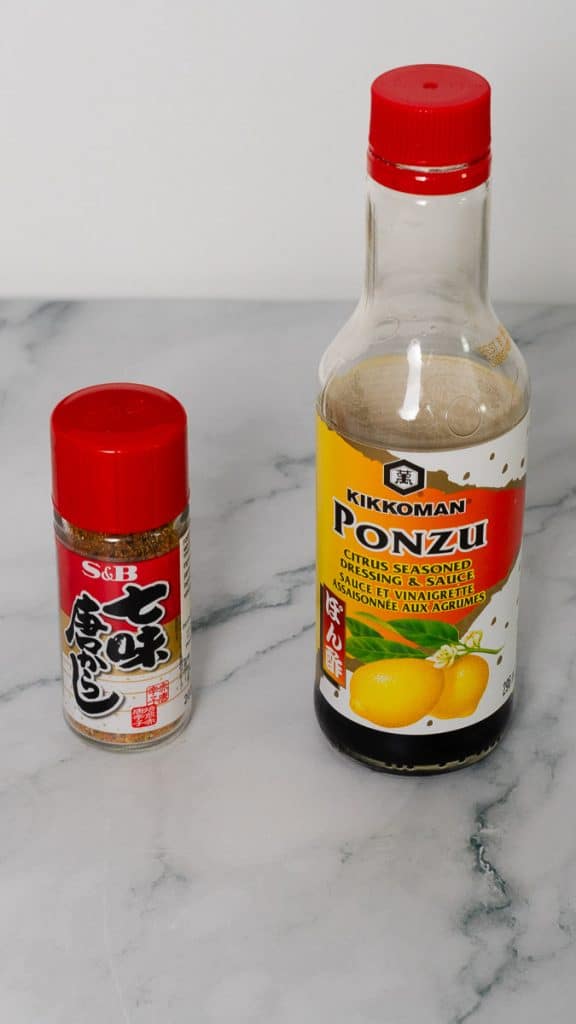
- Ponzu – This is a citrus flavoured soy sauce.
- Shichimi Togarashi (Japanese seven spice)- This is a commonly used spice blend used in Japanese cuisine.
Equipment
- Dutch oven (or other heavy-bottomed pot)
- Colander
How to Make Mille Feuille Nabe
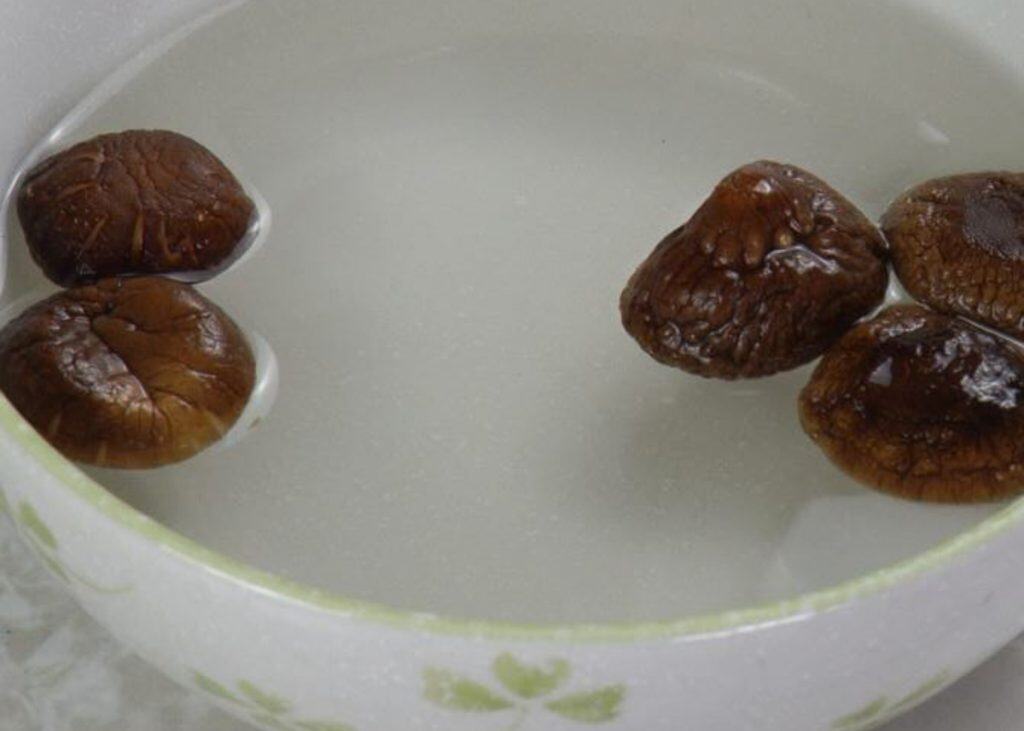
If using dried shiitake mushrooms, let them hydrate for about 30 minutes in boiling hot water. Meanwhile, we’ll be preparing our nabe.
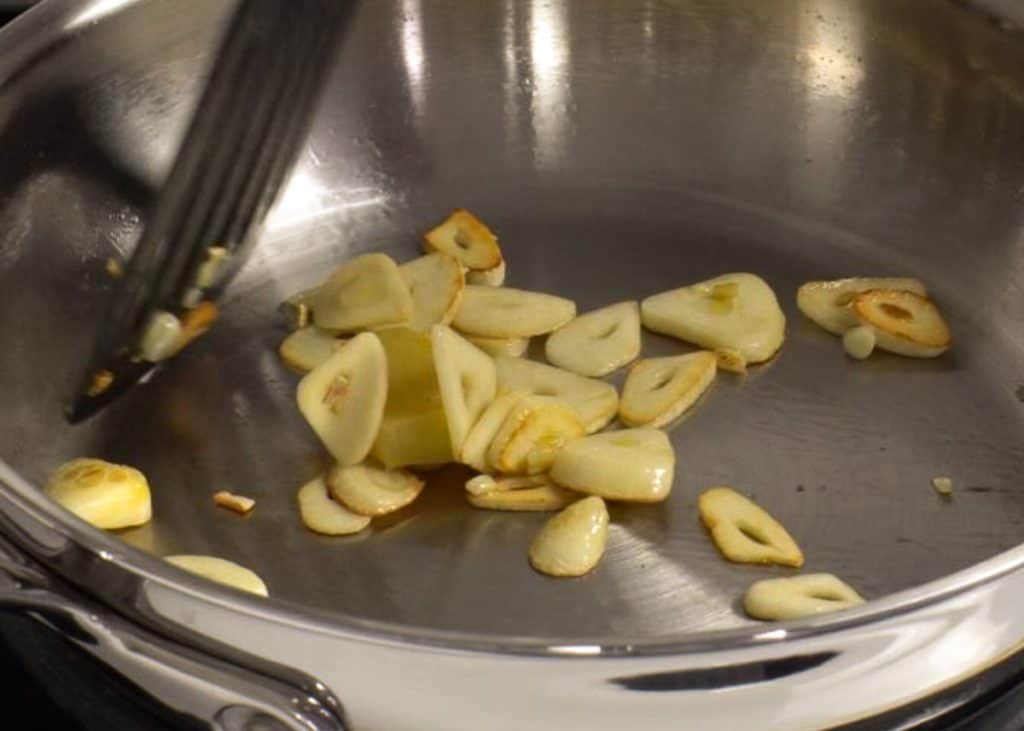
We’ll be making the sliced garlic and ginger extra delicious by pan-frying them in oil first until they are browned before adding them to the broth. Set the garlic and ginger slices to the side.
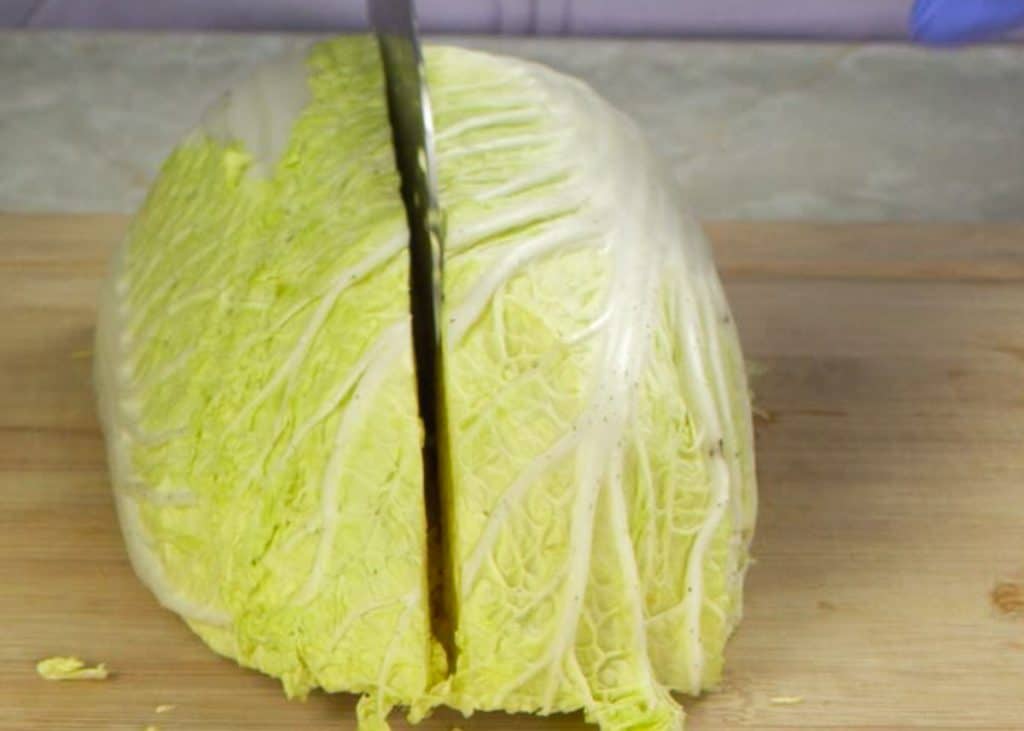
Slice the napa cabbage into halves lengthwise.
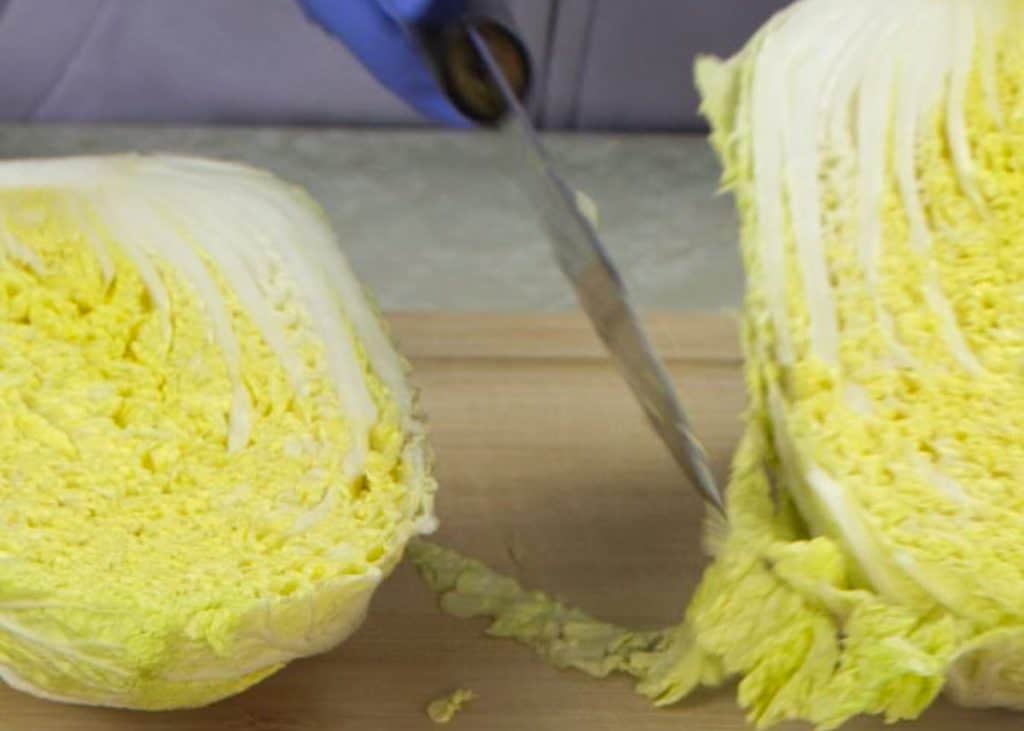
Then, slice them in half again lengthwise into quarters. We’ll be keeping the core intact as that will help the napa cabbage stay intact as we slide the pork belly slices in between the leaves.
Then, slide the pork belly slices in between the leaves of the napa cabbage. This is the most time-consuming part of the recipe, but it is so satisfying in the end when you see the flower coming together. If you still have extra pork belly slices even though you covered all the spaces in between the leaves, you can slide in extra pork belly slices anywhere you want. It will all stay in place.
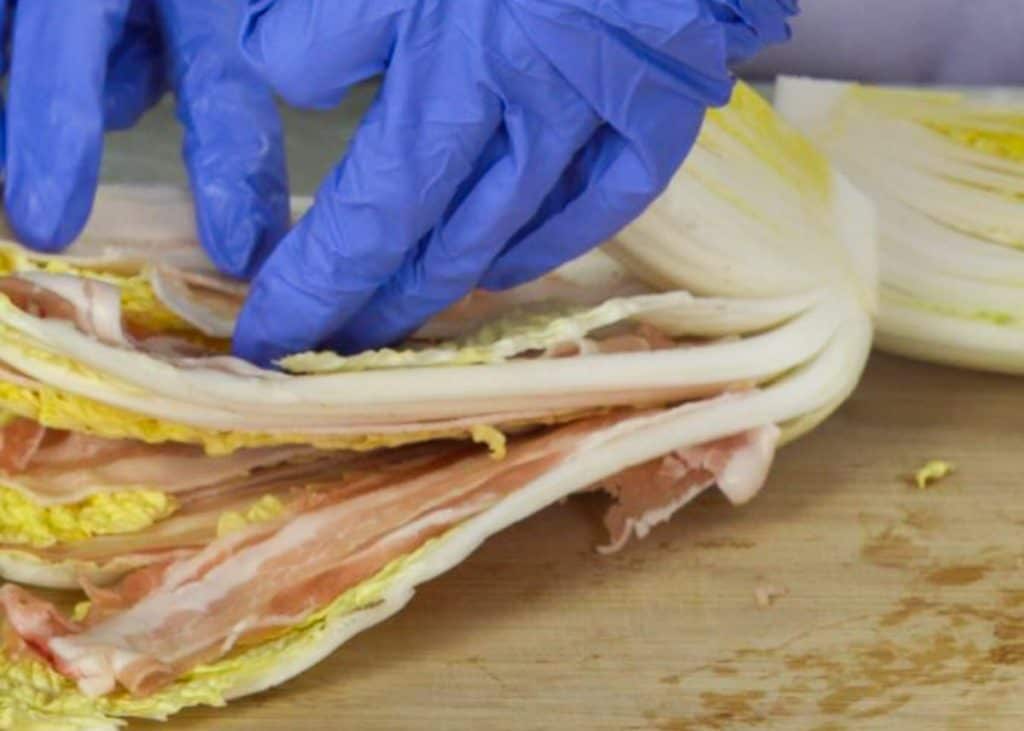
Cut the napa cabbage quarters in half widthwise.
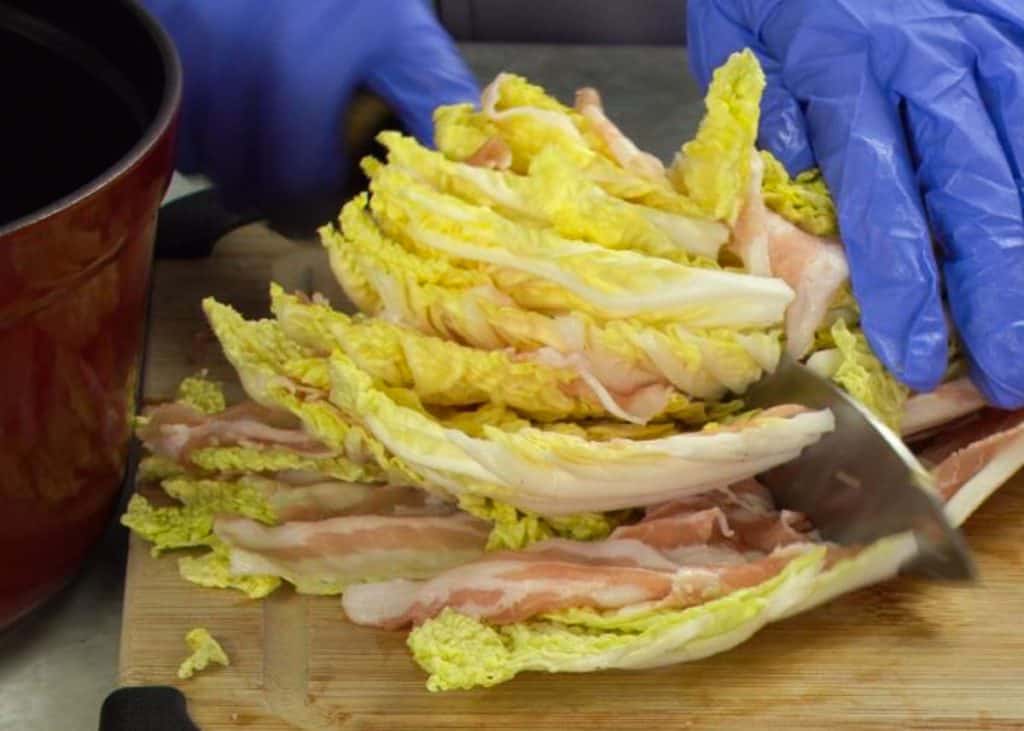
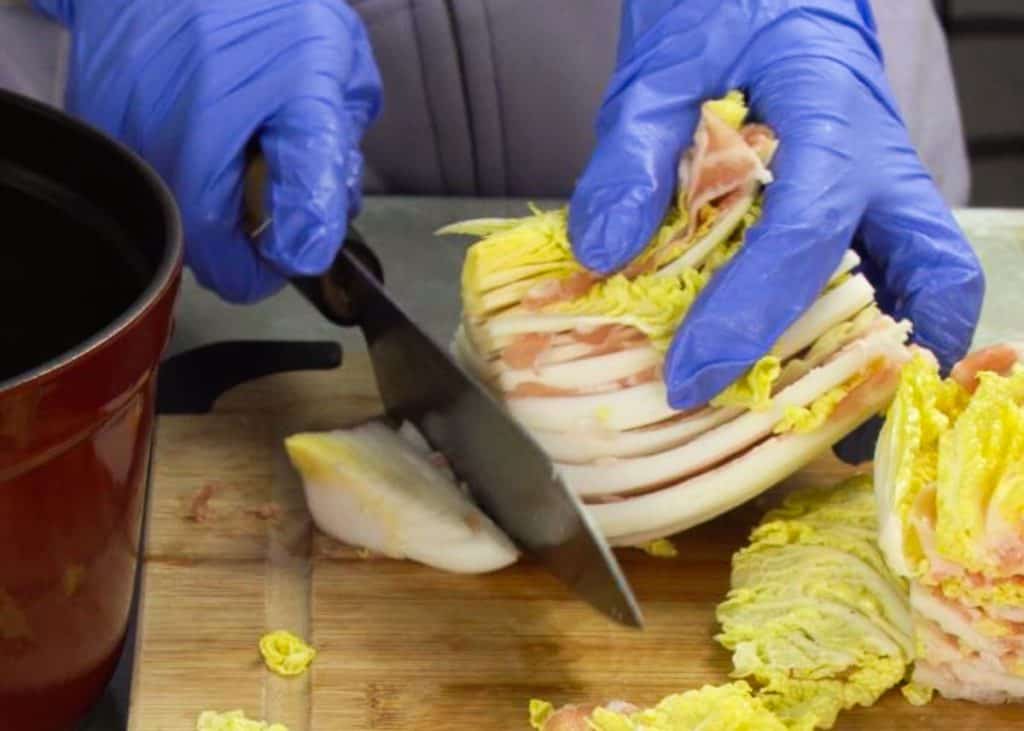
Cut off the cores as well if needed to fit the napa cabbage in your Dutch oven. You’ll want about 2 inches of space between the lid and the surface of the soup.
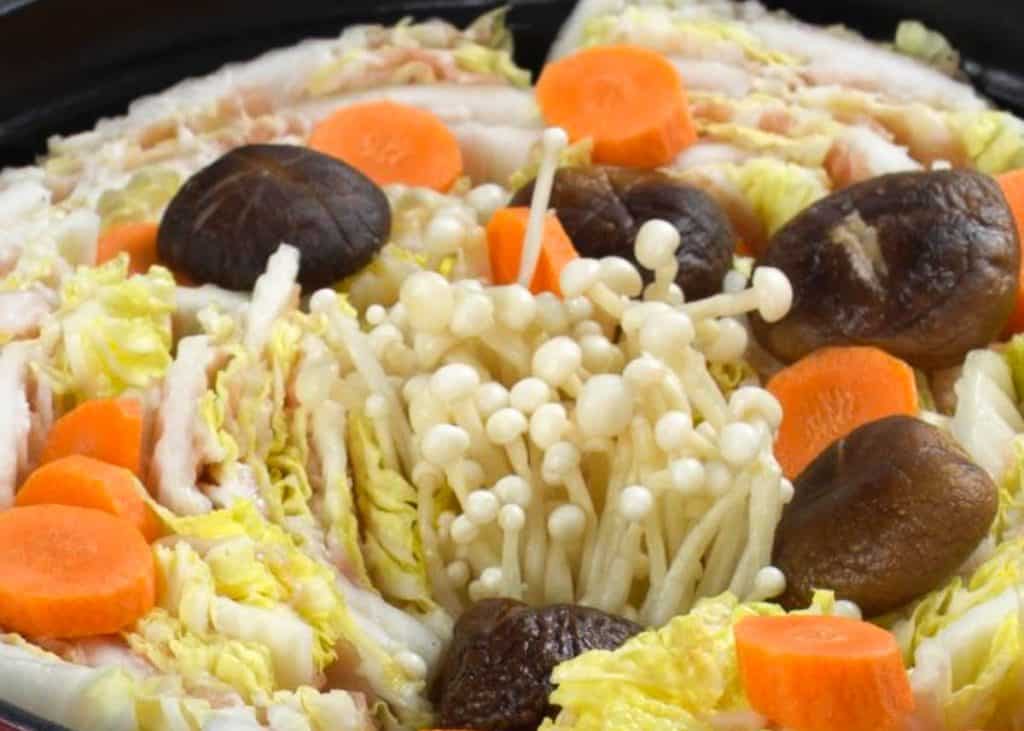
Place the sections of napa cabbage/ pork belly into the Dutch oven, packing the leaves very tightly. That way, the nabe will still look like a pretty flower in the end.
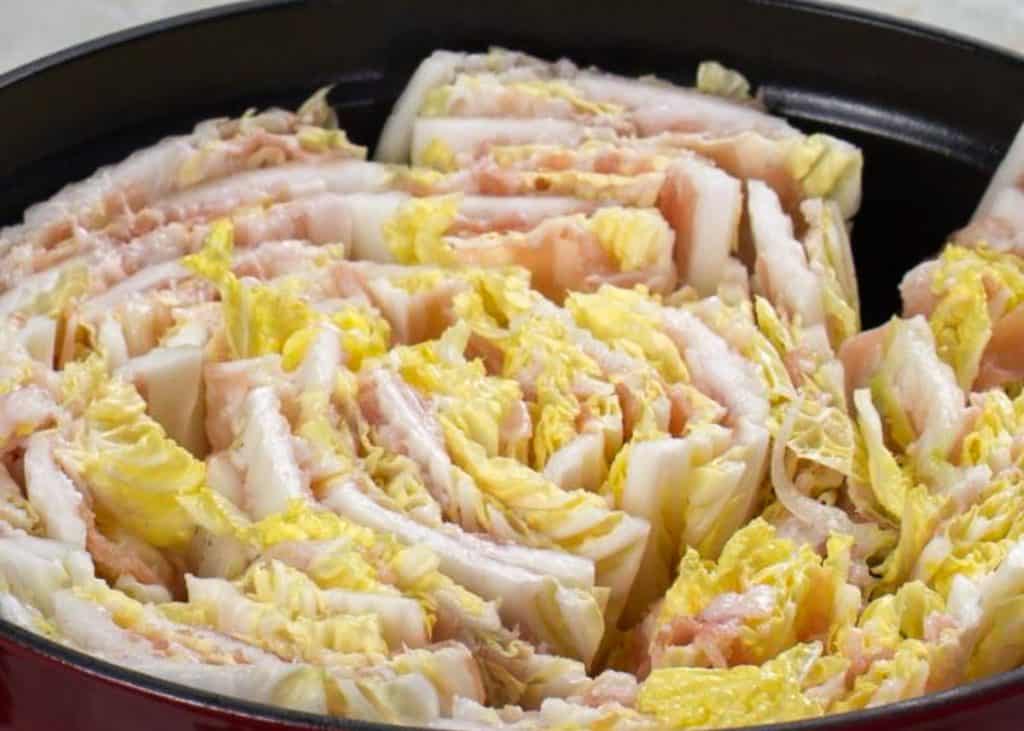
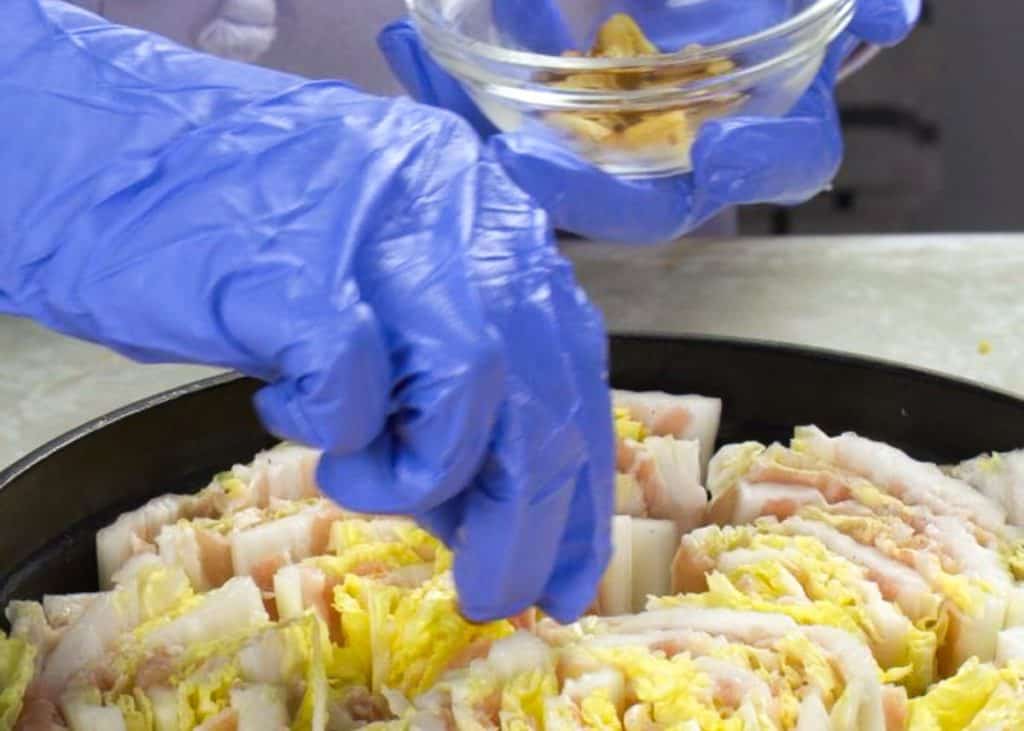
Push the slices of garlic and ginger in between the leaves, dispersing them well in the nabe.
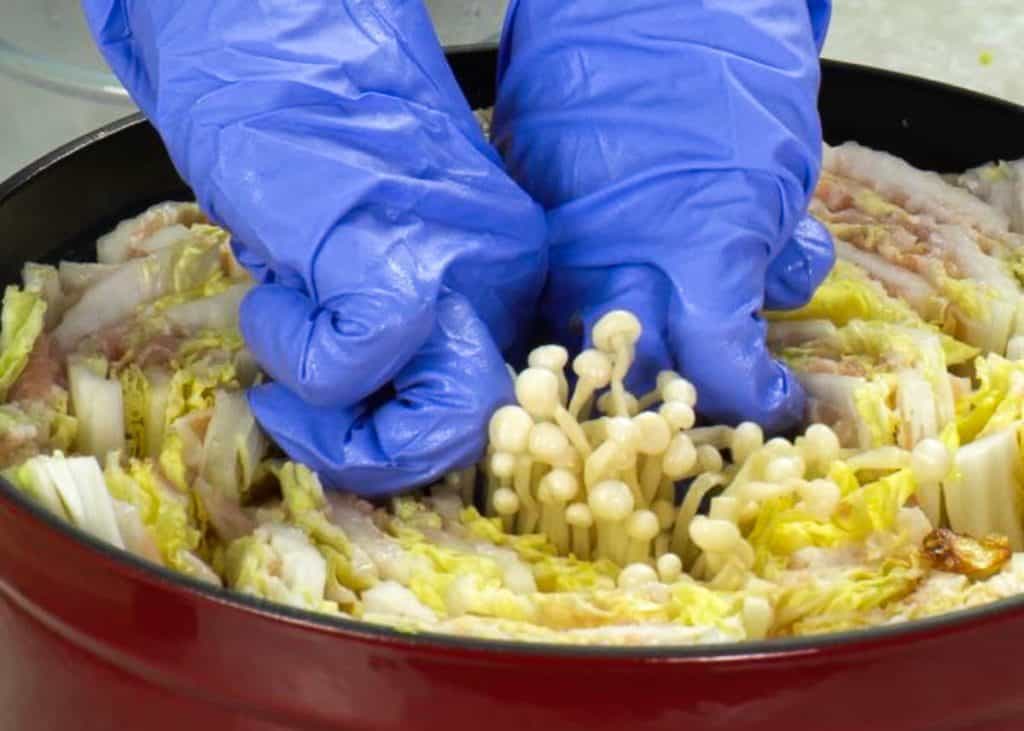
Wedge the enoki mushrooms into the center of the nabe so they fit snugly. I try to fit in as much enoki mushrooms as I can.
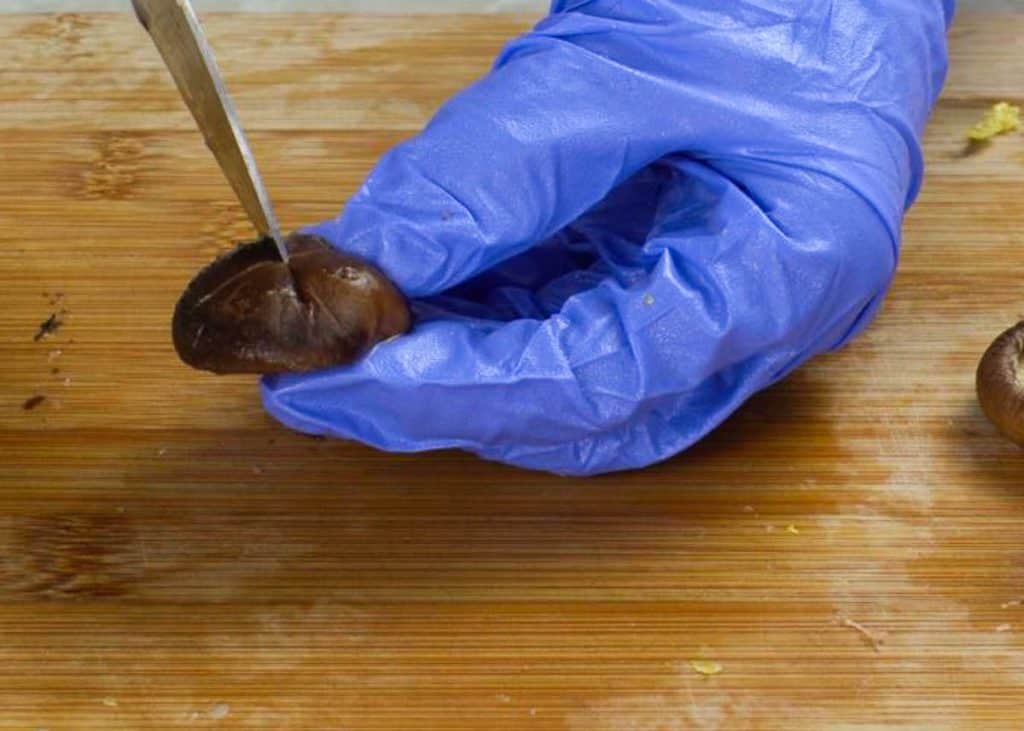
This is optional, but you can score a cross-like shape on the tops of the shiitake mushrooms if you want. This is just for visual appeal of course.
Place the hydrated shiitake mushrooms and sliced carrots on top of the napa cabbage and pork belly.
In a large bowl, mix boiling hot water, dashi powder, sake, soy sauce, salt, mirin and sesame oil. Then, pour the soup into the Dutch oven. We want about 2 inches of space between the soup and the rim of the Dutch oven so the soup doesn’t boil over when covered.
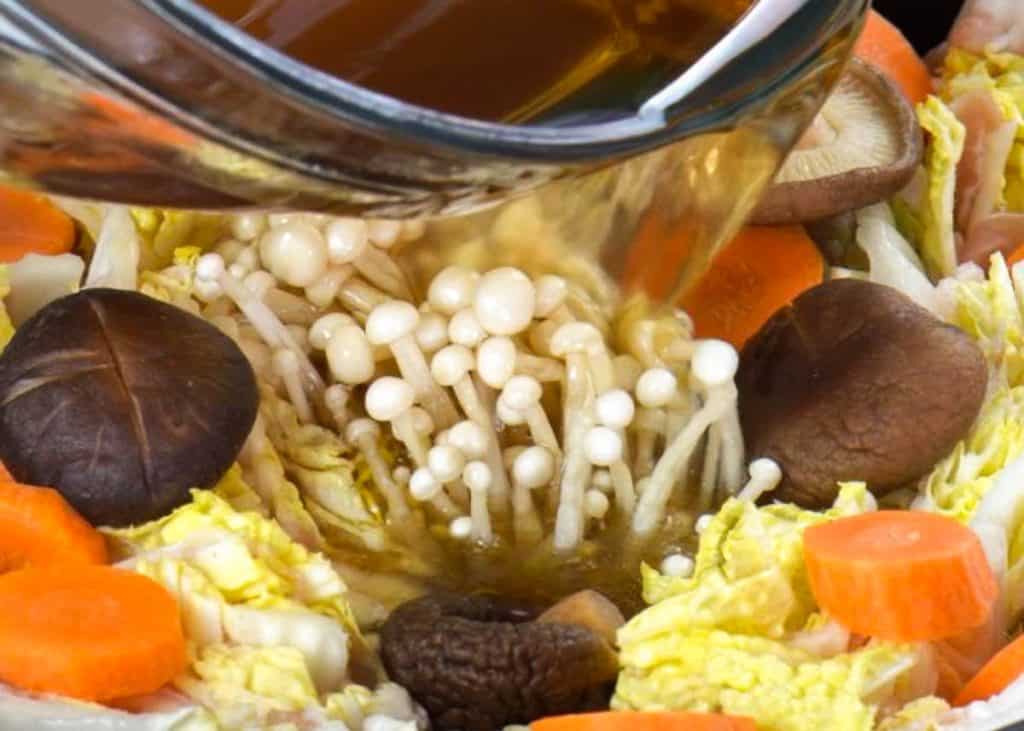
If you don’t have enough liquid, add more boiling water. You want to submerge as much of the napa cabbage in liquid as possible. The napa cabbage will cook faster inside boiling broth and become extremely tender.
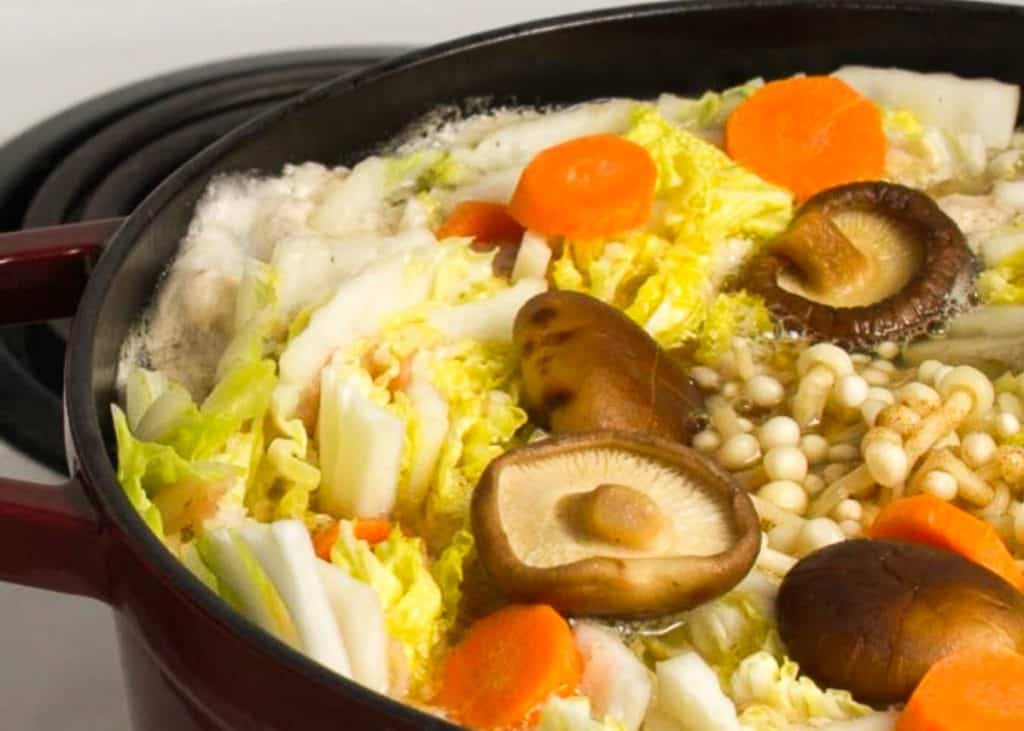
Bring the soup to a boil and then reduce the heat to a simmer. Let it simmer on medium heat with the lid on for 20 – 25 minutes or until napa cabbage is soft and pork belly looks cooked.
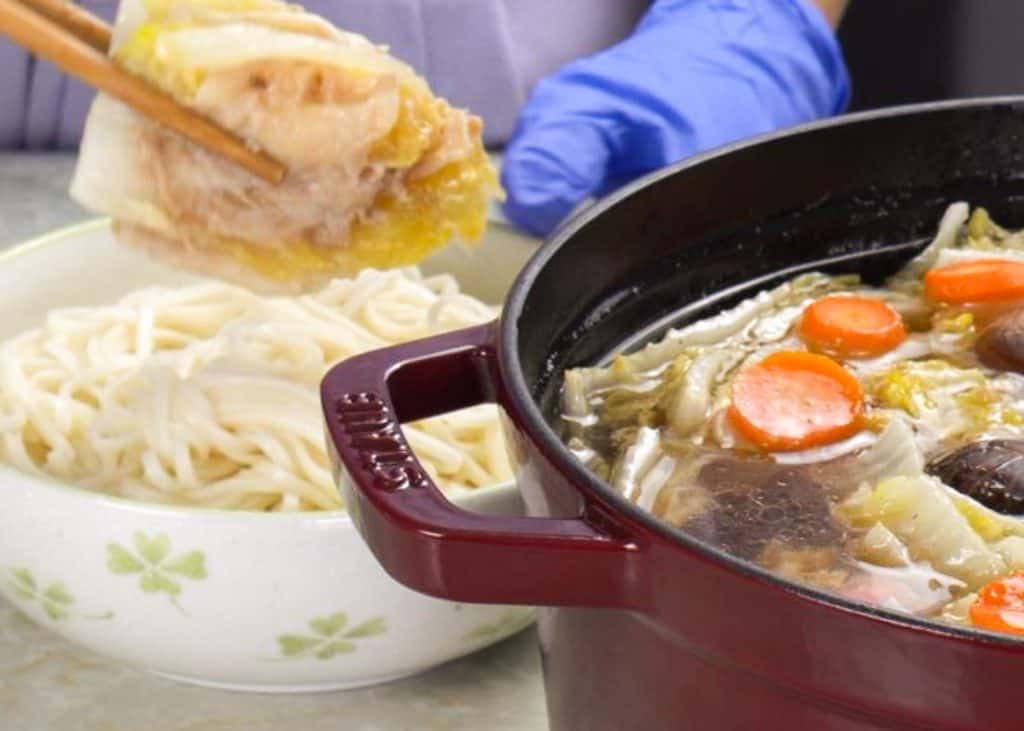
While the nabe is simmering, boil some noodles according to the manufacturer’s instructions. Drain the noodles with a colander and rinse with cold water to stop the cooking process. The noodles are less likely to stick when you rinse them with cold water. I like to serve wheat noodles with the nabe.
If you want, you can sprinkle some chopped green onions on top of the nabe.
I highly recommend serving this dish with ponzu sauce. If you can take the heat, add some shichimi togarashi to the ponzu sauce.
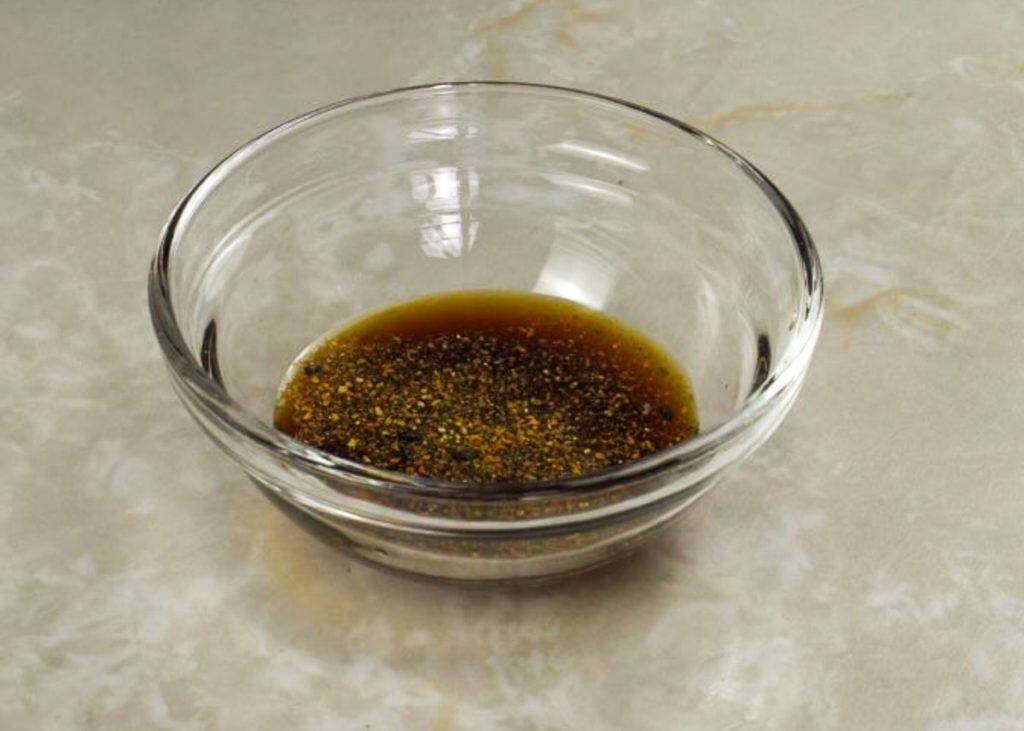
Take a piece of napa cabbage and pork belly and dip it in some spiced ponzu sauce. To us, it doesn’t taste nearly as good without this sauce. You get a refreshing taste of citrus that contrasts with the fat from the pork along with umami flavours and the heat from the spice.
Mille Feuille Nabe
Mille feuille nabe will bring warmth to your dinner table after a cold day. Nappa cabbage is boiled in savoury dashi broth until it’s soft and subtly sweet.
7
servings1
hour25
minutes491
kcal1
hour25
minutesKeep the screen of your device on
Ingredients
5 dried shiitake mushrooms
3 cloves garlic, sliced
1 inch knob of ginger, sliced
neutral-flavoured oil
1 small head napa cabbage (900 – 1200g or 2 – 3lb)
1.25 lb thinly sliced pork belly
1/2 – 1 pack enoki mushrooms
1/2 carrot, sliced
- Broth
5 cups boiling hot water
1 tbsp dashi powder
1/4 cup sake
3 tbsp soy sauce
1/2 tsp salt
1/4 cup mirin
1 tsp sesame oil
- Optional
noodles
1 green onion, chopped
shichimi togarashi (Japanese seven spice)
ponzu
Directions
- Hydrate shiitake mushrooms in boiling hot water for about 30 minutes.
- Fry sliced garlic and ginger in oil until golden brown.
- Cut napa cabbage into quarters lengthwise.
- Place the slices of pork belly in between the leaves of the napa cabbage.
- Slice the napa cabbage quarters in half widthwise. Cut off the cores of the napa cabbage.
- Arrange the napa cabbage sections around the pot with cut side facing up.
- Wedge the slices of ginger and garlic in between the leaves.
- Stuff the enoki mushrooms in the middle of the mille feuille nabe in between the leaves. Slice a criss-cross pattern on top of the shiitake mushrooms and place them on top of the nabe, along with sliced carrots.
- In a large bowl, mix the broth ingredients until combined and pour it into the pot. Make sure napa cabbage is almost completely submerged. Add boiling water as needed.
- Bring to a boil and reduce heat to a simmer on medium low covered for 20-25 min until pork belly is no longer pink and napa cabbage is tender.
- While the nabe is cooking, boil some noodles according to manufacturer’s instructions.
- Garnish with chopped green onions and serve with shichimi togarashi in ponzu sauce.
Nutrition Facts
7 servings per container
Serving Size2 cups
- Amount Per ServingCalories491
- % Daily Value *
- Total Fat
45g
58%
- Saturated Fat 16g 80%
- Polyunsaturated Fat g
- Monounsaturated Fat 29g
- Cholesterol 60mg 20%
- Sodium 719mg 32%
- Potassium 518mg 12%
- Total Carbohydrate
10g
4%
- Dietary Fiber 2g 8%
- Total Sugars 4g
- Protein 10g 20%
- Vitamin A 1162mcg 130%
- Vitamin C 36mg 40%
- Calcium 116mg 9%
- Iron 1mg 6%
- Riboflavin 0.3mg 24%
- Niacin 5mg 32%
- Vitamin B6 0.45mg 27%
- Vitamin B12 0.3mcg 13%
- Folate 107mcg 27%
* The % Daily Value tells you how much a nutrient in a serving of food contributes to a daily diet. 2,000 calories a day is used for general nutrition advice.